معرفی
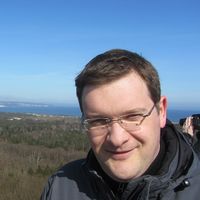
Lars Erik Zeige is a Privatdozent (PD Dr.) at the Humboldt University of Berlin, where he works at the Institute for German Language and Linguistics within the Philosophical Faculty II. He leads the research area for Variation and Change of the German Language and the Reference Corpus Old German. As Deputy Spokesperson of the Collaborative Research Centre 1412 'Register', he also serves as project leader for subproject B04 'Emergence and transfer of register patterns' and project management for subproject Z 'Central tasks'.
Zeige's research focuses on linguistic variation and change, particularly in historical German. His work combines empirical and theoretical approaches to understanding language change, with special emphasis on historical registers, prepositional and nominal groups, and negation. He has developed expertise in corpus linguistics, especially through his work with the Old German Reference Corpus, which provides essential resources for studying early German language history. His theoretical interests include the history of linguistic science and the development of 'Language as the Structure of Social Systems' as an explanatory framework for language change.
His recent publications demonstrate a strong focus on register phenomena across historical contexts, particularly in the works of Martin Luther and other historical figures. Zeige has made significant contributions to corpus development, including the Birgitta-Notker Corpus (BiNoKo) for comparative research on historical registers and the Old German Reference Corpus. His methodological approach combines corpus analysis with theoretical linguistics to model register variation across time periods and cultural contexts.
Zeige has served as academic advisor for BA German Linguistics and MA Linguistics programs. His committee work includes service as the examination committee representative for admissions and recognitions since 2020, and previous roles as representative of mid-level staff in various university governance bodies.
His laboratory work centers on the Old German Reference Corpus project and the development of visualization methods for linguistic data, including chronographic mapping techniques that represent linguistic variation across time and space.