معرفی
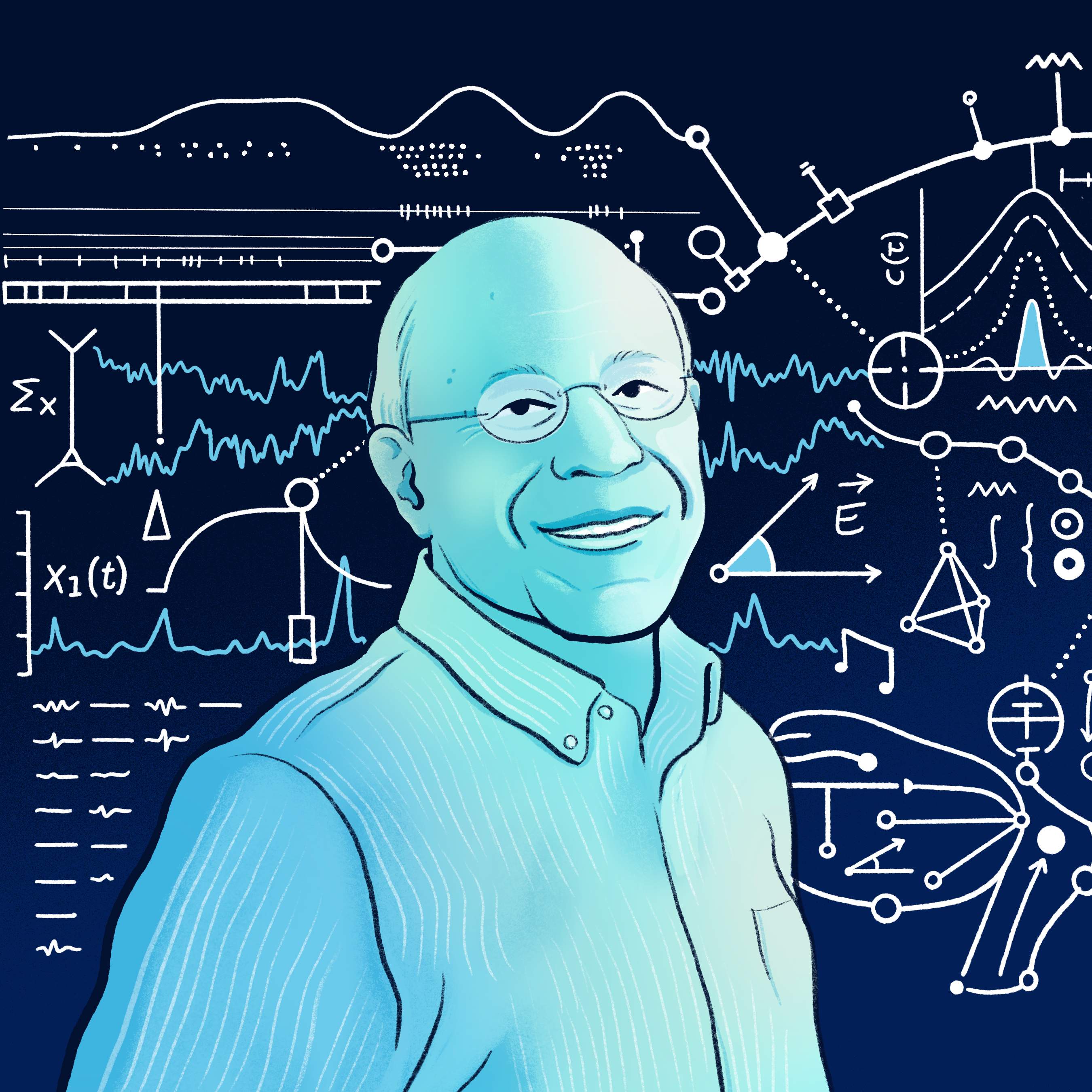
Larry F. Abbott is the William Bloor Professor of Theoretical Neuroscience and Professor of Physiology and Cellular Biophysics at Columbia University's Vagelos College of Physicians and Surgeons. He serves as Principal Investigator at Columbia's Zuckerman Institute and Codirector of Columbia's Kavli Institute for Brain Science. His appointments span multiple Columbia institutions including the Center for Theoretical Neuroscience (where he is Codirector), the Motor Neuron Center (Member), the NeuroTechnology Center (Member), and the Grossman Center for the Statistics of Mind (Advisory Board).
Dr. Abbott specializes in theoretical neuroscience, building computational models to understand how large groups of neurons work together to perceive and respond to the world. His research focuses on synaptic plasticity - the brain's ability to change connections with experience - across multiple time spans. He collaborates extensively with experimentalists, working on diverse projects from electric fish sensory systems to human brain-machine interfaces and neurological disorders including ALS, schizophrenia, and obsessive-compulsive disorder. His work bridges theoretical neuroscience with practical applications in artificial intelligence and medical treatments.
Dr. Abbott's research output shows consistent productivity with publications spanning from the 1990s to the present, with recent work focusing on neural network dynamics, motor control systems, and computational approaches to understanding brain function. His publications appear in top journals including Nature, Neuron, and Cell.
Major Scientific Recognition:
- Lundbeck Foundation Brain Prize (2024)
- National Academy of Sciences Member (2014)
- American Academy of Arts and Sciences Member (2006)
- National Institutes of Health Director's Pioneer Award
- Brain Initiative Team-Research Circuit Program Project Lead (2017-present)
As a theorist, Dr. Abbott works across multiple domains of neuroscience, integrating findings from various labs to develop unifying computational frameworks. His approach emphasizes the back-and-forth process between theoretical models and experimental validation, contributing significantly to our understanding of how brains process information and generate meaningful responses to sensory input.