
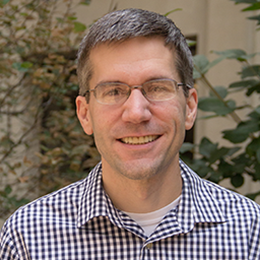
Kyle S. Minor
دانشیار · Clinical Psychology
Indiana University–Purdue University Indianapolisمعرفی
Kyle S. Minor, Ph.D., is an Associate Professor in the Department of Psychology at Indiana University with affiliations at the Roudebush VA Medical Center and the Cognition, Language, and Affect in Serious Psychopathology (CLASP) laboratory. His research focuses on clinical risk markers of psychosis and interventions for schizophrenia-spectrum disorders.
Education:
- 2013: Postdoctoral Fellowship, Center for Early Detection, Assessment, and Response to Risk, Department of Psychiatry, Harvard Medical School at Beth Israel Deaconess Medical Center
- 2012: Ph.D. in Clinical Psychology, Louisiana State University
- 2012: Clinical Psychology Internship, Massachusetts Mental Health Center, Department of Psychiatry, Harvard Medical School at Beth Israel Deaconess Medical Center
- 2009: M.A. in Psychology, Louisiana State University
- 2004: B.A. in English, Northern Kentucky University
- 2004: B.A. in Psychology, Northern Kentucky University
Dr. Minor's research centers on three core objectives: (1) Developing novel lab and real-world assessments for psychosis mechanisms, particularly Formal Thought Disorder (FTD); (2) Linking clinical risk markers to functional outcomes using ecologically valid objective measures; (3) Creating technology-enhanced interventions for psychosis-spectrum populations. His work integrates cognitive, social, and affective domains with emphasis on real-world applicability.
Analysis of his 2014-2019 publications reveals consistent focus on schizophrenia and psychosis through automated speech analysis, natural language processing, and multi-method assessment. Key trends include objective measurement of FTD in daily life, emotion-cognition interactions in psychosis, and technology-driven interventions targeting functional outcomes beyond traditional clinical scales.
Scientific Awards: None mentioned.
Dr. Minor is recruiting a new graduate student for Fall 2026 and currently leads a KL2-funded grant project developing portable technology interventions for chronic psychosis through multidisciplinary collaborations. His advising emphasizes real-world intervention development and multi-method psychosis research.
He directs the CLASP laboratory, which employs multi-method approaches (subjective, objective, biological markers) to study psychosis across illness stages. Current initiatives include real-world stressor monitoring and technology-adapted interventions, with national collaborations expanding the lab's impact on clinical practice.


