معرفی
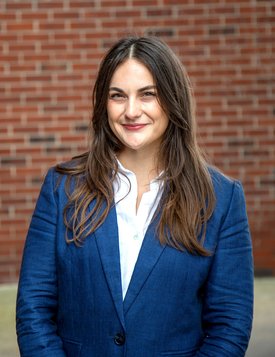
Kristin Poinar serves as Associate Professor at the University at Buffalo, holding dual appointments in the Department of Earth Sciences within the College of Arts and Sciences and the interdisciplinary RENEW Institute. Her research focuses on ice-sheet dynamics and hydrology across Greenland, Antarctica, and paleo-ice sheets like the Laurentide.
She earned her Ph.D. in Geophysics from the University of Washington in 2015. Her scholarly trajectory centers on process-scale modeling of ice-water interactions, particularly investigating how surface meltwater accesses glacier beds and modulates ice flow.
Dr. Poinar's research program examines critical glaciological phenomena including moulin formation, crevasse propagation, firn aquifer dynamics, and subglacial hydrologic networks. She integrates numerical modeling with remote sensing datasets to unravel complex ice-sheet processes, with emphasis on Greenland's response to climate forcing. Her work bridges theoretical frameworks and observational validation through field campaigns.
Analysis of her publication record reveals concentrated expertise in Greenland's hydrology, particularly supraglacial lake drainage mechanics and firn-aquifer hydrology. Her modeling approaches span spatial scales from localized crevasse evolution to ice-sheet-wide dynamics, consistently emphasizing the role of meltwater in modulating ice flow. Antarctic ice-shelf fracture mechanics also features prominently in her cross-polar research.
She actively mentors graduate students including MS candidate Josh Charlton and PhD candidate Naureen Khan, emphasizing inclusive recruitment of minoritized scholars. Her NASA Cryosphere grant (#80NSSC19K0054) with Dr. Lauren Andrews funds research on moulin formation mechanics and subglacial hydrology parameterization.
Dr. Poinar directs the UB Glacier Modeling Lab, which cultivates an anti-racist, supportive research community. The lab contributes to GHub—a collaborative glaciology data/computing platform—and pursues fieldwork in Southeast Greenland to validate models of firn-aquifer drainage.