معرفی
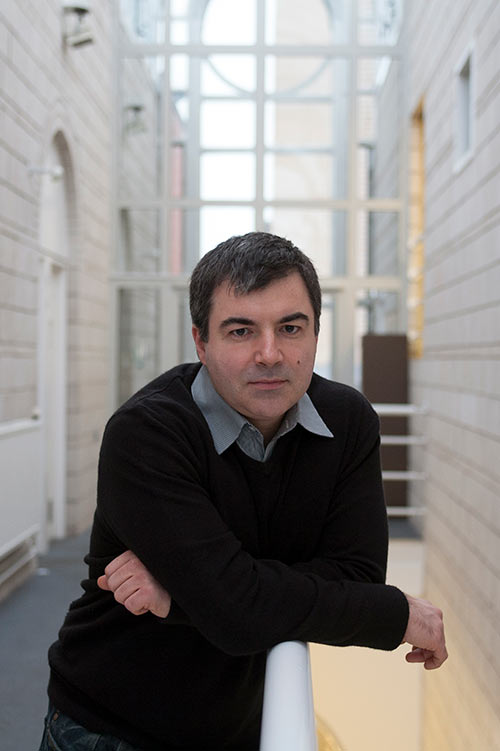
Kostya Trachenko is a Professor of Physics at Queen Mary University of London, affiliated with the School of Physical and Chemical Sciences. He holds a prominent position in theoretical and computational condensed matter physics, with extensive research contributions to the fundamental understanding of states of matter.
- PhD: Cambridge University
- MSc: L'viv University, Ukraine
- Research Fellowship: Darwin College, Cambridge
- EPSRC Advanced Research Fellowship
Trachenko's research focuses on the theoretical foundations of condensed matter physics, particularly the long-standing problems in liquid state theory, melting, and the relationship between fundamental physical constants and material properties. His work has revolutionized our understanding of liquids, developing a phonon-based theory that explains liquid thermodynamics where previous approaches failed. He discovered the Frenkel line on the phase diagram above the critical point, fundamentally changing textbook understanding of states of matter. His research on fundamental physical constants establishing bounds for properties like viscosity and speed of sound has received international recognition, including the Top 10 Physics Breakthrough award.
Analysis of his publication trends shows a consistent focus on connecting fundamental physical constants to material properties, with significant work on viscosity limits, speed of sound bounds, and melting theory. His research spans from pure theoretical physics to practical applications in nuclear materials and fusion energy.
- Top 10 Physics Breakthrough award for work on speed of sound from fundamental constants
- CCP5 prize for outstanding contributions to theory and modeling of condensed matter phases
- Teaching award recognizing excellence in student mentorship
Trachenko actively mentors PhD students, with his students reportedly winning major international prizes, completing projects in less than three years, and securing positions at prestigious institutions including MIT, Cornell, Oak Ridge Laboratory, and King's College. His research has been supported by significant grants, though specific grant details aren't provided in the source material. He has developed extensive molecular dynamics simulation capabilities, evidenced by his work on radiation damage and the DL_POLY software development.
His research group employs advanced computational techniques including molecular dynamics simulations to study atomic-scale phenomena in liquids, glasses, and radiation-damaged materials. The group has produced numerous animations of atomic motions that illustrate key physical processes in liquids and glasses, making complex phenomena visually accessible.