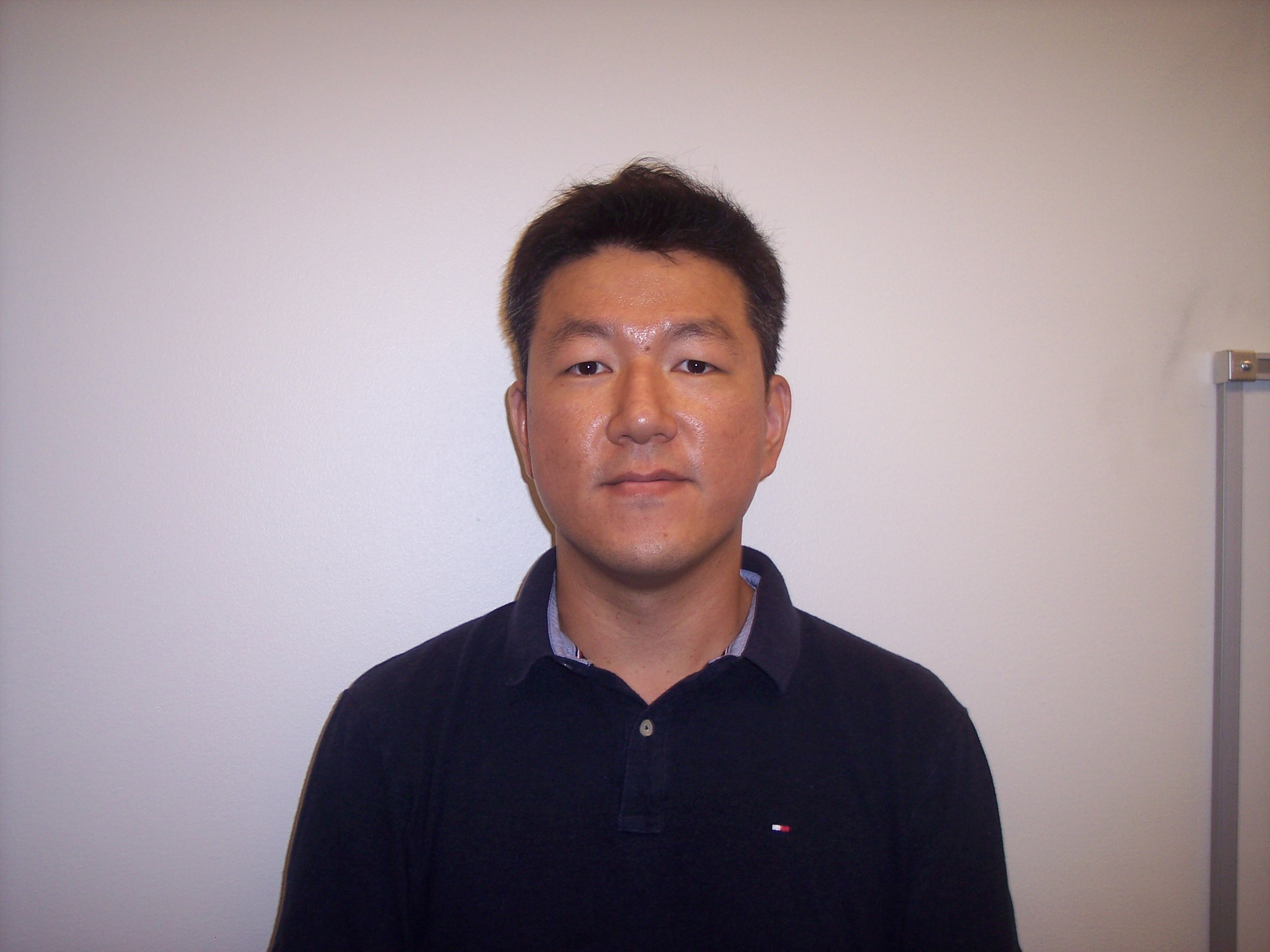
Kostas Triantafyllopoulos
مدرس ارشد · Bayesian time series analysis
University of Sheffieldمعرفی
Dr Kostas Triantafyllopoulos serves as Senior Lecturer in Statistics and MSc Statistics Course Director at the University of Sheffield's School of Mathematical and Physical Sciences. He joined Sheffield in February 2005 after academic positions at Newcastle University (2002-2004) and a post-doctoral appointment at Bristol University (2001-2002).
His educational background includes:
- BSc in Mathematics from Aristotle University of Thessaloniki (1996)
- MSc in Quality Management from Napier University of Edinburgh (1998)
- PhD in Statistics from the University of Warwick (2002)
Triantafyllopoulos specializes in Bayesian time series analysis and forecasting, with significant applications across finance, bioinformatics, medicine, signal processing, and quality control. His methodological innovations include multivariate stochastic volatility modeling using Wishart processes, real-time covariance estimation for state-space models, and particle filter applications for count time series. Recent work (2019-2022) demonstrates strong focus on medical decision making through flexible survival models and pandemic impact analysis using hybrid Bayesian-neural network approaches for shipping economics.
Publication trends reveal a strategic evolution from foundational Bayesian state-space work (2006-2012) toward high-impact interdisciplinary applications. His 30+ journal articles show consistent emphasis on solving autocorrelation challenges in control charts, developing non-parametric monitoring systems for environmental data, and creating flexible parametric frameworks for survival data extrapolation in healthcare contexts.
Research funding includes Nuffield Foundation support as Principal Investigator for "The multivariate general steady model" and EPSRC collaboration as Co-investigator on "Simulation Tools for Automated and Robust Manufacturing". He actively contributes to the Mathematical and Statistical Modelling research group, with current work bridging theoretical statistics and real-world industry/healthcare challenges.