معرفی
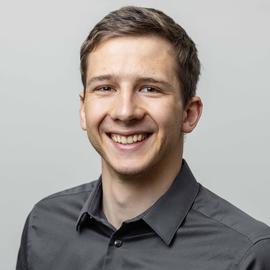
Prof. Dr. Klaus-Robert Müller is a Full Professor and Chair of Machine Learning at Technical University of Berlin, leading the Berlin Institute for the Foundations of Learning and Data (BIFOLD). He holds joint appointments at Korea University (Department of Artificial Intelligence) and collaborates with institutions like Google Research and the Max Planck Society. With a PhD in theoretical computer science from the University of Karlsruhe, Müller has pioneered work in statistical learning theory, brain-computer interfaces, and explainable AI. His research spans computational neuroscience, molecular dynamics, and medical imaging applications such as digital pathology and neuroimaging analysis. He has directed major initiatives like the Berlin Center for Machine Learning (BZML) and the Berlin Big Data Center (BBDC), now integrated into BIFOLD. Müller is a member of prestigious academies, including the Leopoldina and Berlin-Brandenburg Academy of Sciences, and has received awards like the Vodafone Innovations Award (2017) and Berlin Science Prize (2014).
Education:
- PhD in Theoretical Computer Science (1992), University of Karlsruhe
- Diploma in Mathematical Physics (1989), University of Karlsruhe
Research Interests: Müller’s work integrates machine learning with interdisciplinary challenges, emphasizing explainability and ethical AI. Key areas include neural network interpretability, non-stationary data analysis, and applications in healthcare (e.g., tumor classification, genomic data analysis) and materials science (e.g., quantum chemistry simulations). His contributions to brain-computer interfaces and neuroimaging have advanced understanding of neural oscillations and brain connectivity.
Awards & Recognition:
- Member, German National Academy of Sciences Leopoldina (2012)
- Member, Berlin-Brandenburg Academy of Sciences (2017)
- Science Prize of Berlin (2014)
- Vodafone Innovations Award (2017)
Labs & Leadership: Directs BIFOLD and co-leads initiatives like the TEA Challenge in molecular dynamics. Supervises interdisciplinary teams focused on AI in pathology, computational chemistry, and neurotechnology. His work bridges theory and practice, with impactful contributions to open datasets (e.g., QCML) and scalable machine learning frameworks.