معرفی
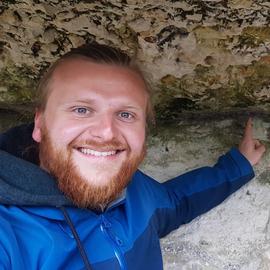
Klaus Paschek is a Ph.D. candidate in Astrophysics at the Max Planck Institute for Astronomy in Heidelberg, Germany, with affiliation to Heidelberg University. His research bridges planetary science and astrobiology, focusing on the chemical and physical processes that could lead to life's emergence. As an Executive Board member of the Origin of Life Early-career Network (OoLEN), he actively contributes to the international origins of life research community.
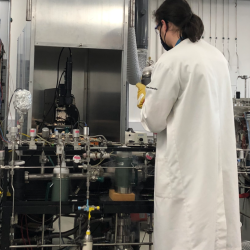
Dr. Paschek's primary research interests center on prebiotic chemistry in extraterrestrial environments, particularly examining how carbonaceous chondrites could deliver life's building blocks to early Earth. His work investigates planetary habitability mechanisms including tidal heating effects and the synthesis pathways of critical biomolecules such as nucleobases, ribose, and vitamin B3 within asteroid parent bodies. He combines sophisticated theoretical modeling with laboratory experimental validation to understand how prebiotic molecules form in space environments and survive delivery to planetary surfaces.
His publication record demonstrates significant contributions to understanding how meteoritic material could have seeded Earth with prebiotic compounds essential for life's emergence. His research spans from specific molecule synthesis (nucleobases, ribose, vitamin B3) to broader questions about early Earth conditions and the RNA world hypothesis. Through his work on tidal accelerations and cryovolcanism, he also explores energy sources that could maintain habitable conditions on other worlds.
As a member of the Origin of Life Early-career Network executive board, Paschek helps organize and direct international research efforts in this interdisciplinary field, connecting chemistry, astronomy, geology, and biology to tackle one of science's most fundamental questions.