معرفی
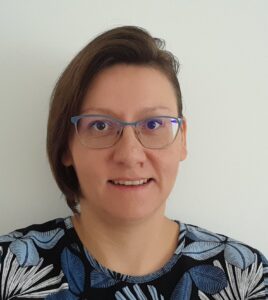
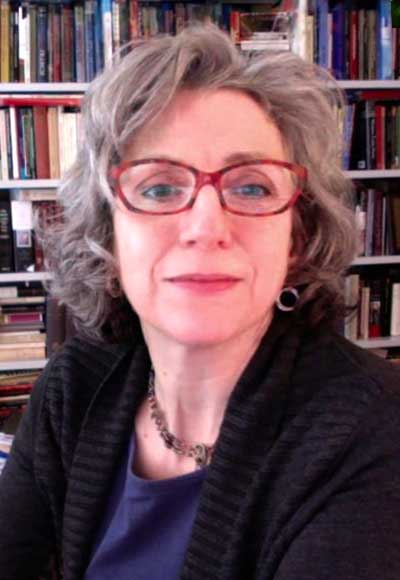
Katarzyna Lecky serves as Surtz Associate Professor in the English Department at Loyola University Chicago, specializing in sixteenth- and seventeenth-century English literature through interdisciplinary lenses of intellectual history, material culture, and spatial theory. Her scholarship investigates how cheap print shaped English national identity via geographical and botanical discourses, positioning ordinary consumers as active participants in commonwealth-building.
Her academic foundation includes a B.A. from the University of Notre Dame, M.A. from Boston College, and Ph.D. from the University of Colorado at Boulder. Lecky's research traverses historical cartography, alternative literacies, pre-Linnaean botany, virtue ethics, and archival practices, with particular focus on how spatial politics, sensory experiences, and nativist botanical traditions constructed Englishness in Renaissance public spheres. Her seminal work Pocket Maps and Public Poetry in Renaissance England (Oxford, 2019) establishes how map-poetry constellations fostered civic engagement among everyday readers.
Lecky's publication trajectory reveals consistent exploration of naturalization rhetoric, colonial spatial dynamics, and gendered power structures across canonical texts—from Spenser's Irish allegories to Milton's theological innovations. Her forthcoming projects extend this spatial-literary analysis into Mediterranean marriage politics and Cowley's botanical poetics, demonstrating how textual authority diversified through vernacular scientific discourse.
Her scholarly excellence has been recognized through major fellowships:
- ACLS Fellowship
- Mellon Foundation Fellowship
- National Endowment for the Humanities Fellowship
- Renaissance Society of America Fellowship
- Institute for Research in the Humanities Fellowship (University of Wisconsin-Madison)
- Folger Shakespeare Library Fellowship
- Huntington Library Fellowship
- Newberry Library Fellowship
These awards have enabled extensive archival research at premier institutions, supporting her dual-book project tracing England's geographical and botanical imaginaries. While specific student mentorship isn't documented, her digital humanities contributions—particularly 'Humanizing the Interface'—reflect commitment to pedagogical innovation and critical technology engagement within academic communities.