معرفی
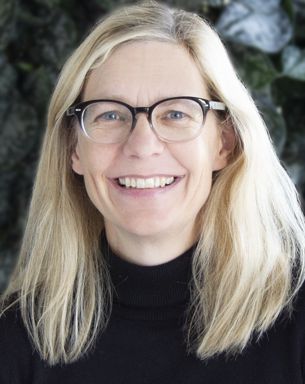
Katarina Pettersson is a Researcher and Head of the Division of Rural Development at the Swedish University of Agricultural Sciences (SLU), holding a PhD and docent (Associate Professor equivalent) in Social and Economic Geography. She is actively engaged in multiple international research projects including the EU Horizon Europe-funded “GRASS Ceiling” project on gender equality in rural and agricultural innovation systems, and the “SteamBioAfrica” project focused on bioenergy solutions in Southern Africa.
Her research interests center on feminist approaches to rural development, with particular focus on women’s entrepreneurship, critical entrepreneurship studies, and feminist care ethics as applied to farming contexts including care farming and farm tourism. She examines how gender is constructed within EU rural policy frameworks and investigates the gendered dimensions of sustainability transitions in rural areas.
Her publication record demonstrates consistent focus on gendered entrepreneurial experiences across diverse geographical contexts from Sweden to Rwanda and Tanzania. Her work critically analyzes how neoliberal entrepreneurship policies impact women entrepreneurs differently across Nordic welfare states and Global South contexts, while exploring alternative models of rural development grounded in feminist ethics. Her recent publications increasingly address issues of sustainability, environmental justice, and the intersection of care ethics with agricultural practices.
Scientific Awards:
- Highly Commended Award Winner of Literati Network Awards 2013 for her 2012 article “Support for Women’s Entrepreneurship – A Nordic Spectrum”
As a supervisor, Pettersson has guided multiple doctoral students through completion, including Malin Bäckman (2023) who defended her thesis on sustainability in Rosendal, and currently supervises Karolin Andersson working on urban agriculture in Rwanda. She has received significant research funding from FORMAS, Forte, Kamprad research foundation, and EU Horizon programs for projects examining women’s entrepreneurship in rural contexts, green care on farms, and gender equality in agricultural innovation systems. Her work directly contributes to UN Sustainable Development Goals 5 (gender equality), 10 (reduced inequalities), 11 (sustainable cities and communities), and 2 (zero hunger).