Karin Limburg
استاد · Fisheries Science
SUNY College of Environmental Science and Forestryمعرفی
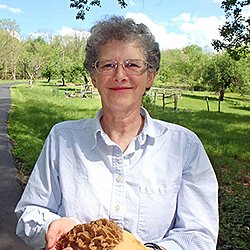
Karin Limburg is a Distinguished Professor in the Department of Environmental Biology at the State University of New York College of Environmental Science and Forestry (SUNY ESF) and currently serves as a visiting professor at the Department of Aquatic Resources, Swedish University of Agricultural Sciences. Her interdisciplinary research bridges watershed science, fisheries science, ecosystem ecology, and ecological economics, frequently incorporating collaborations with physicists to address complex environmental challenges.
Her primary research focus involves otolith biogeochemistry as a tool to reconstruct fish life histories and environmental exposures, particularly regarding deoxygenation, hypoxia, mercury contamination, and climate change impacts. She investigates how these stressors affect fish physiology, population dynamics, and ecosystem services across diverse systems including the Baltic Sea, Mekong River, Hudson River estuary, and North American freshwater ecosystems. Her work integrates field studies, laboratory analyses, and modeling to inform fisheries management and conservation strategies.
Analysis of her recent publications reveals a dominant trend in using otolith chemistry as a natural recorder of environmental conditions, with significant emphasis on deoxygenation impacts in marine and freshwater systems. Her research spans biogeochemical analysis, population genetics, and policy-relevant studies on river restoration and natural area governance, demonstrating consistent innovation in methodological approaches to track fish responses to anthropogenic and climatic changes.
Professor Limburg actively mentors six graduate students pursuing degrees in Environmental Biology, Fish & Wildlife Biology & Management, and Aquatic and Fisheries Science. Her collaborative research projects include investigations into hypoxia paradigms, river ecosystem responses to urbanization, and international efforts to address ocean deoxygenation. She maintains active partnerships across institutions and countries, reflecting her commitment to transdisciplinary solutions for aquatic ecosystem challenges.