معرفی
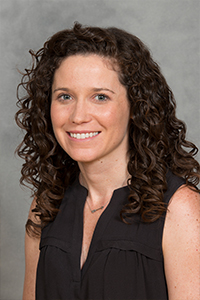
Kara Styck serves as an Assistant Professor in the Department of Psychology at Northern Illinois University, specializing in School Psychology. Her research develops assessment tools for measuring cognitive abilities, social skills, and academic engagement in K-12 and higher education environments, with direct applications to educational decision-making processes including screening and diagnostic procedures.
Her educational background includes:
- Ph.D. in Psychology from Arizona State University
- M.A. in Psychology from Arizona State University
- B.S. from Florida State University
Dr. Styck's research program centers on psychometric innovation in educational contexts, particularly focusing on measurement validity, rater effects, and cultural considerations in assessment. She examines how psychological measurements influence critical educational decisions while developing instruments that enhance accuracy in identifying student needs. Her methodological expertise spans Rasch modeling, factor analysis, and generalizability theory to address challenges in behavioral and cognitive assessment.
Analysis of her publication record reveals consistent emphasis on measurement precision across diverse educational settings, with recurring themes including rater variability correction, structural validation of assessment tools, and cross-cultural applicability of psychological instruments. Her work demonstrates increasing sophistication in addressing measurement challenges through advanced statistical techniques while maintaining practical relevance for classroom applications.
She actively mentors graduate students as evidenced by numerous student-coauthored publications, with advisees contributing to research on anxiety measurement, cultural load in intelligence testing, and rater effects in academic competence scales. Her collaborative approach extends to departmental research centers including the Center for the Study of Family Violence and Sexual Assault and the Collaborative on Early Adolescence.
Dr. Styck contributes to the department through teaching PSYC 324 (Developmental Child Psychology), PSYC 640 (Theory and Assessment of Intellectual Functioning), and PSYC 648 (Consultative Interventions), while maintaining an active research program that bridges psychometric theory and educational practice.