معرفی
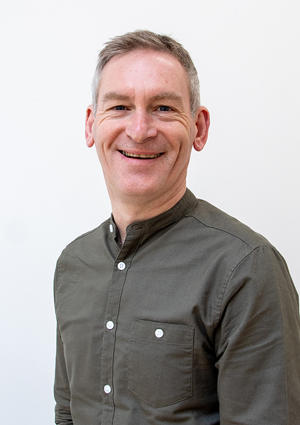
Jürgen Schwark is a Professor at the Westphalian University of Applied Sciences in Bocholt, Germany, where he teaches in the Department of Business and Information Technology (Fachbereich Wirtschaft und Informationstechnik). He is affiliated with the Institute for Empirical Economic and Social Research and specializes in Business Administration with a focus on Sports, Leisure and Cultural Management. His academic career spans multiple German institutions including the University of Duisburg, University of Münster, Braunschweig/Wolfenbüttel University of Applied Sciences, and the German Sport University Cologne.
Educational background:
- Apprenticeship as industrial locksmith at Mannesmann AG Duisburg
- Studies in Social Sciences at University of Duisburg
- Doctorate (Dr. phil.) from University of Paderborn
- Habilitation from University of Münster
- Continuing education in Business Philosophy at FernUniversität Hagen
Professor Schwark's research focuses on the intersection of sports, tourism, and urban culture, with particular emphasis on sports tourism, event management, and the socio-economic impact of major sporting events. His work combines qualitative market research with critical analysis of urban development and cultural phenomena. Recent publications demonstrate an expansion into urban sociology, particularly examining gambling venues and their role in city culture.
His publication history reveals consistent scholarly output since the mid-1990s, with a clear trajectory from foundational sports tourism research toward more critical examinations of urban culture and event spaces. The most recent work, published in 2025, addresses arcades and betting shops as 'black sheep' of urban culture, indicating his ongoing engagement with contemporary social issues. His research methodology primarily employs qualitative approaches to analyze marketing, regional planning, and ethical considerations in tourism and sports contexts.
Professor Schwark teaches a diverse range of courses including Introduction to Business Administration, City and Regional Marketing, Social and Ecological Marketing, Sports and Tourism Marketing, Management of Leisure and Cultural Institutions, and Business Ethics. His teaching reflects his research interests, bridging theoretical business concepts with practical applications in sports, tourism, and cultural sectors. The upcoming office hours scheduled for October 2025 confirm his active engagement with students and ongoing academic responsibilities.