معرفی
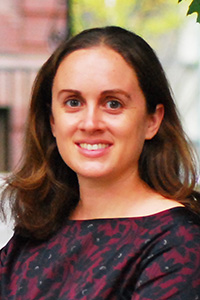
Julia Mundy is the John L. Loeb Associate Professor of the Natural Sciences and of Engineering and Applied Sciences at Harvard University, where she leads the Mundy Group. Her research focuses on designing quantum materials at the atomic scale using thin film deposition and advanced characterization techniques. She is affiliated with the Department of Physics and the Department of Engineering and Applied Sciences.
- Education:
- A.B./A.M., Chemistry and Physics, Harvard University
- Ph.D., Applied Physics, Cornell University
- Postdoctoral Fellow, Materials Science, University of California, Berkeley
Her research explores the synthesis of novel quantum materials through molecular-beam epitaxy (MBE), with applications in superconductivity, magnetism, and electronic devices. She investigates metastable materials and oxide interfaces to uncover phenomena like room-temperature multiferroics and transparent superconductors.
The group's publications highlight trends in nickelate-based superconductors, multiferroic systems, and strain-engineered quantum materials, often combining MBE with techniques like ARPES, XAS, and electron microscopy. Key subfields include atomic-scale defects, electronic structure, and soft chemistry modifications.
Scientific Awards:
- Moore Inventor Fellowship (2024)
- NSF CAREER Award (2024)
- DOE Early Career Award (2021)
- Packard Fellowship for Science and Engineering (2020)
- APS George E. Valley, Jr. Prize (2019)
- IUPAP Young Scientist Prize in Magnetism (2019)
- ETH Zurich Materials Prize (2017)
- Oxide Electronics Prize (2017)
- Sloan Research Fellowship in Physics (2022)
Julia has mentored numerous PhD candidates and undergraduate researchers, many of whom have received fellowships like the NSF Graduate Research Fellowship and the Paul & Daisy Soros Fellowship. Her group has collaborated with institutions including Cornell University, University of Zurich, and Lawrence Berkeley National Laboratory.
The group works in Harvard's LISE facility, utilizing tools like aberration-corrected LEEM/PEEM for atomic-scale analysis. Recent projects include fluoride-ion battery electrolytes and piezoelectric oscillators funded by the Moore Foundation and NSF.