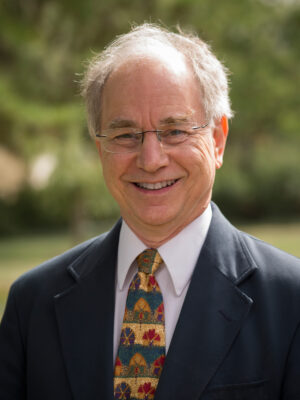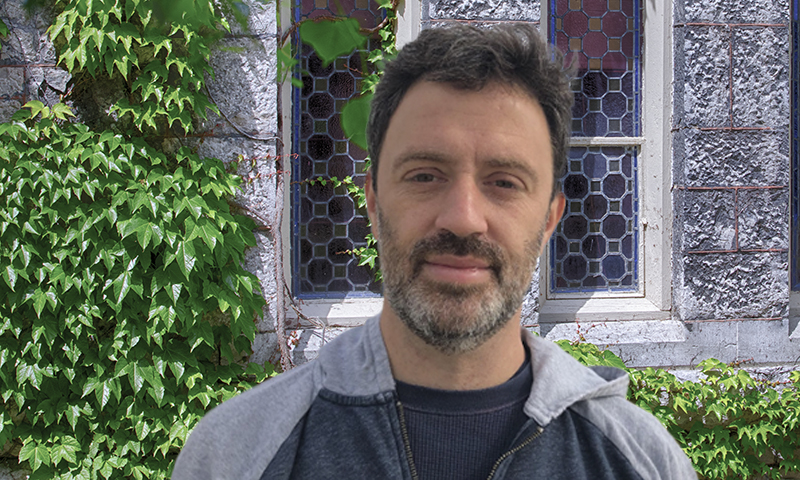
Joshua Greenstein
دانشیار · Economics of Inequality and Distribution
Hobart and William Smith Collegesمعرفی
Joshua Greenstein is an Associate Professor of Economics at Hobart and William Smith Colleges, where he also serves as Chair of both the Economics and Public Policy Studies departments. He joined the faculty in 2015 and holds a Ph.D. from The New School for Social Research. His academic focus lies at the intersection of economic development, inequality, and policy measurement.
- Ph.D., The New School for Social Research, New York, NY
- M.A., The New School for General Studies, New York, NY
- B.A., The University of Michigan, Ann Arbor, MI
Greenstein’s research critically examines the structural patterns of economic growth, income inequality, and the political economy of development metrics. He investigates how global frameworks like the Millennium Development Goals (MDGs) shape development agendas and influence human rights policies. His work spans poverty measurement, premature deindustrialization, and the defeminization of labor, often highlighting how statistical targets can distort policy priorities and marginalize disadvantaged nations. He has taught at Rutgers University, New Jersey City University, The New School, and SIAS International University in China.
His recent publications reveal a consistent focus on the power of numbers in shaping policy outcomes. From analyzing the precariat class in the U.S. labor market to critiquing international poverty lines and MDG targets, his scholarship emphasizes methodological rigor and social justice. Themes of equity, measurement bias, and structural transformation recur across his work, positioning him as a critical voice in development economics.
- American Economic Association
- Eastern Economic Association
- World Economics Association
- Association for Evolutionary Economics
- Union for Radical Political Economists
Greenstein has collaborated extensively with scholars such as Sakiko Fukuda-Parr and David Stewart, contributing to influential critiques of global development indicators. His work has been supported through academic affiliations and research institutions, though specific grant details are not listed. He is actively involved in shaping curriculum and policy discourse through his teaching and leadership roles.
He is associated with research centers and working groups focused on inclusive development and social rights, including collaborations with UNU-WIDER and UNICEF. His blog posts on Developing Economics further extend his scholarly impact into public intellectual spaces, addressing topics like deindustrialization in Brazil and South Africa and its consequences for human welfare.
حوزههای پژوهشی