معرفی
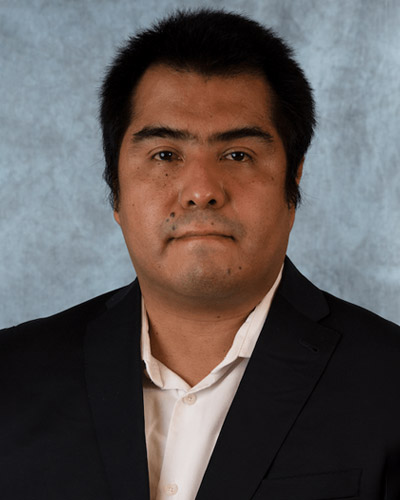
Jose Morales is an Assistant Professor in the Department of Mathematics and the Department of Physics & Astronomy at the University of Texas at San Antonio (UTSA), within the College of Sciences. He holds a Ph.D. in Computational Science, Engineering, and Mathematics from the University of Texas at Austin and a B.S. in Physics from Universidad Nacional Autónoma de México (UNAM).
- Ph.D. in Computational Science, Engineering, and Mathematics, University of Texas at Austin
- M.S. in Computational Science, Engineering, and Mathematics, University of Texas at Austin
- B.S. in Physics, Universidad Nacional Autónoma de México
His research lies at the intersection of computational physics and applied mathematics, with primary interests in computational electronics, inverse problems in electrochemistry, kinetic theory, and quantum information. His work involves developing and applying numerical methods to model complex physical systems, particularly in semi-classical and quantum regimes. He leads the “Kinetic Methods for Quantum & Semi-Classical Problems Lab,” where he mentors students in advanced computational techniques.
His recent publications and research focus show a strong trend in solving kinetic equations using high-order numerical schemes, particularly discontinuous Galerkin methods, applied to electron transport in semiconductors and quantum systems. His teaching includes advanced topics such as Quantum Mechanics II and Ordinary Differential Equations, reflecting his interdisciplinary expertise.
While no personal scientific awards are listed, his research group achieved recognition when undergraduate Hamza Patwa, working under his mentorship, was named a Barry Goldwater Scholar — a prestigious award highlighting excellence in STEM research.
Dr. Morales actively advises students and integrates real-world applications into his teaching, emphasizing model assumptions, limitations, and interdisciplinary connections. He has taught Quantum Mechanics II and Differential Equations at UTSA, receiving strong student feedback for his clear explanations, structured notes, and use of technology in pedagogy. He seeks to improve quantum education by incorporating expert advice and adapting to student backgrounds.
He leads the “Kinetic Methods for Quantum & Semi-Classical Problems Lab,” focusing on computational approaches to quantum and semi-classical transport problems. The lab engages in research involving kinetic equations, density matrix modeling, and numerical simulations of quantum systems, often using Fourier transform and Galerkin-based methods.