معرفی
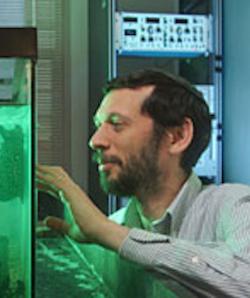
Dr Jordan H Boyle is a Lecturer in Engineering Systems at the School of Mechanical Engineering, University of Leeds, Faculty of Engineering and Physical Sciences. His research lies at the intersection of engineering, biology, and neuroscience, focusing on bio-inspired robotics derived from invertebrate behavior. He leads in the development of robust, low-cost, and adaptive robotic systems for operation in unpredictable environments.
His expertise includes computational neuroscience, neural modelling, 3D printing, and robot locomotion. He is affiliated with the Robotics Institute and the Institute of Design, Robotics and Manufacturing at Leeds.
- BSc (hons) in Electrical Engineering, University of Cape Town
- MSc in Electrical Engineering, University of Cape Town
- PhD in Computational Neuroscience, University of Leeds
Dr Boyle's research is driven by the philosophy of invertebrate biology—emphasizing simplicity, high deployability, and cost-efficiency in robotic systems. He investigates neuromechanical control in organisms like C. elegans and Aplysia californica to inform the design of autonomous robots capable of adaptive locomotion in complex terrains. His work combines computational modelling with advanced manufacturing techniques to create bio-mechatronic systems.
Although no specific publications are listed in the provided text, his research outputs span bio-inspired robotics, surgical robotics, and computational neuroscience, indicating a strong interdisciplinary focus on adaptive control, locomotion mechanisms, and neural controllers. His work on a serpentine robot using a virtual C. elegans nervous system gained international media coverage.
Scientific recognition includes:
- EPSRC PhD+ Fellowship
- Media features in New Scientist, Financial Times, BBC Radio Leeds, and The Gadget Show
Dr Boyle supervises postgraduate researchers and contributes to undergraduate education, particularly in electronics and microcontrollers for product design students. He also serves as a personal tutor and project supervisor for Mechatronics students. His educational approach is hands-on, integrating lectures with practical lab sessions.
He is the Mechatronics Programme Manager and Public Relations Liaison for the EPSRC National Facility for Innovative Robotic Systems, and continues to contribute to the CoDIR project in a supervisory role.