معرفی
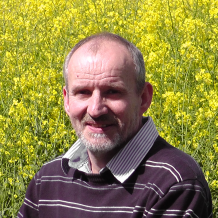
Professor John P. Hammond is a distinguished academic at the University of Reading's School of Agriculture, Policy and Development, where he serves as Professor in the Department of Crop Science. With over two decades of research experience, he has established himself as a leading expert in plant nutrition, particularly focusing on phosphorus physiology and nutrient use efficiency in crop plants.
Hammond's research program centers on understanding plant responses to nutrient deficiencies, with particular emphasis on phosphorus nutrition in Brassica species. His work spans molecular mechanisms, physiological responses, and field applications, creating a comprehensive research pipeline from fundamental science to practical agricultural solutions. His laboratory investigates root architecture adaptations, molecular signaling pathways, and nutrient remobilization processes that enable plants to thrive under nutrient-limited conditions. This research has significant implications for sustainable agriculture and reducing fertilizer dependency in crop production systems.
Analysis of Professor Hammond's recent publications reveals a consistent focus on phosphorus nutrition in Brassica crops, particularly oilseed rape (Brassica napus). His work has evolved from basic physiological studies to incorporate advanced genomic, proteomic, and molecular approaches. Recent research demonstrates increasing integration of precision agriculture techniques and climate change adaptation strategies, reflecting the evolving challenges in sustainable crop production. The interdisciplinary nature of his work is evident in collaborations spanning plant physiology, molecular biology, soil science, and agricultural technology.
Professor Hammond has been instrumental in developing research teams focused on nutrient use efficiency, collaborating extensively with colleagues at the University of Reading and internationally. His work has contributed significantly to understanding how crop plants adapt to nutrient stress, with practical applications for improving agricultural sustainability. The consistent publication record, including numerous high-impact papers in leading journals, demonstrates his ongoing active contribution to the field of plant nutrition and crop science.