معرفی
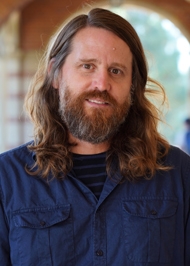
Joe Henrich is the Ruth Moore Professor of Biological Anthropology in the Department of Human Evolutionary Biology at Harvard University. He is also an Affiliated Faculty member in the Department of Psychology. Prior to Harvard, he served as a professor of Economics and Psychology at the University of British Columbia, holding the Canada Research Chair in Culture, Cognition and Coevolution. His research integrates evolutionary theory with cultural evolution to explore how human psychology shapes genetic evolution, focusing on economic decision-making, social norms, fairness, religion, marriage, prestige, cooperation, and innovation.
- Presidential Early Career Award for young scientists (2004)
- Early Career Award for Distinguished Contributions (Human Behavior and Evolution Society, 2009)
- Peter and Charlotte Schoenenfeld Faculty Fellowship at NYU’s Stern School of Business (2013-14)
- Wegner Prize for Theoretical Innovation (Society for Personality and Social Psychology, 2018)
- Senior Fellow at the Canadian Institute for Advanced Research (2010-2019)
- Fellow of the Cognitive Science Society (2021)
Henrich’s work combines fieldwork in Peru, Chile, and the South Pacific with large comparative projects. He has led extensive research on Yasawa Island, Fiji, examining cultural transmission, social norms, cooperation, and religious morality. His publications span evolutionary anthropology, cognitive science, and religious studies, often involving cross-cultural datasets and behavioral experiments. Notable books include The Secret of Our Success (2016) and The WEIRDest People in the World (2020).
Henrich’s recent articles highlight themes in cultural evolution, moral psychology, and religious studies. These works analyze supernatural punishment, moral reasoning, and adaptive learning biases using behavioral experiments and ethnographic data from diverse societies.
His advising and grants include collaborations with Fijian researchers and projects funded by institutions like the Canadian Institute for Advanced Research. He has trained Fijian team members in research techniques and conducted annual health assessments, emphasizing network methods to map cultural transmission.
Henrich’s lab work on Yasawa Island involves behavioral experiments, cognitive measures, and ethnographic documentation of daily life. The project teams include Fijian researchers and international collaborators, focusing on topics such as ethno-marine ecology, kinship, and chiefdom structures.