معرفی
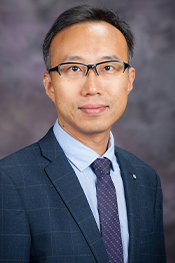
Jing Ding is a Research Assistant Professor in the Department of Mechanical and Nuclear Engineering at Kansas State University's College of Engineering. He earned his Ph.D. in Power Engineering and Engineering Thermophysics from Xi’an Jiaotong University in 2020 and joined Kansas State University in 2021 as a postdoctoral fellow before being promoted to his current position in 2024.
Education:
- Ph.D., Power Engineering and Engineering Thermophysics, Xi’an Jiaotong University, 2020
- B.S., Energy and Power System and Automation, Xi’an Jiaotong University, 2013
His research focuses on electromicrofluidic (EMF) technologies, leveraging electrokinetic phenomena such as electrowetting-on-dielectric (EWOD) and dielectrophoresis (DEP) to manipulate fluids, particles, cells, and molecules. These technologies are applied in disease diagnosis, environmental monitoring, and biomanufacturing. A key innovation in his work involves sensing gel techniques that amplify single-cell signals in hydrogel films, enabling precise quantification and characterization of pathogens and cancer cells. He is also developing triboelectric nanogenerators (TENGs) that convert mechanical energy into electricity via triboelectrification and electrostatic induction, aiming to create self-powered EMF platforms.
While specific publication titles are not listed, Dr. Ding has authored over 18 peer-reviewed papers, indicating a strong and consistent research output in microfluidics and bio-sensing domains. His work bridges engineering, materials science, and biomedical applications, showing a clear trend toward integrated, portable, and energy-autonomous diagnostic systems.
Service and Recognition:
- Frequent reviewer for Lab on a Chip
- Frequent reviewer for Analytical Chemistry
Dr. Ding has not yet advised any named students based on available information. There is no mention of external grants or funding, though his research trajectory suggests active involvement in sponsored projects. He is not listed as holding any formal scientific awards at this time.
He is part of the research ecosystem within the Department of Mechanical and Nuclear Engineering, contributing to advanced research in microfluidics and energy conversion technologies. His lab work likely involves interdisciplinary collaboration across bioengineering, materials science, and electrical engineering, supporting the development of next-generation diagnostic tools and sustainable sensor platforms.