معرفی
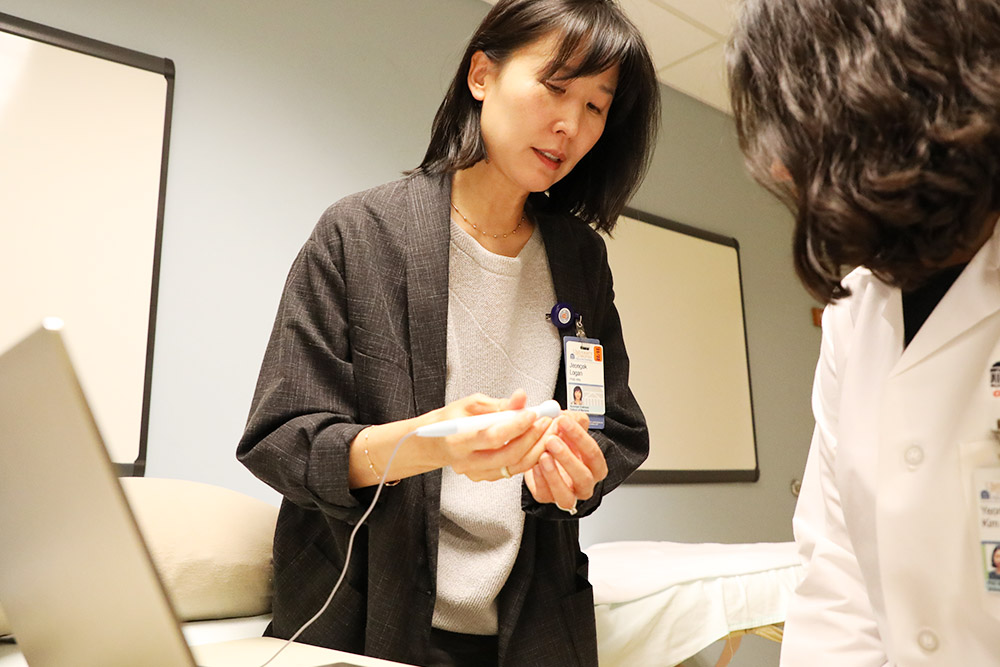
Associate Professor Jeongok Logan of the University of Virginia School of Nursing specializes in cardiovascular nursing with a focus on arterial stiffness mechanisms and interventions. Her research program bridges nursing science, physiology, and behavioral health to address cardiovascular risks in vulnerable populations.
- PhD: University of North Carolina at Chapel Hill
- Postdoctoral Fellowship: NIH/NINR Intramural Research Training Award (IRTA)
Dr. Logan's research centers on the physiological pathways linking psychological stress to arterial stiffness, with particular emphasis on sleep-cardiovascular interactions and culturally tailored interventions. Her work demonstrates that psychological stress directly increases arterial stiffness while stretching exercises and improved sleep quality can mitigate this effect. Current studies examine how sleep moderates the relationship between arterial stiffness and cognitive impairment in older adults.
Analysis of her recent publications reveals consistent focus on arterial stiffness measurement (pulse wave velocity), sleep disturbance impacts on cardiovascular parameters, and stress biomarkers across diverse populations. Her work increasingly incorporates multi-ethnic cohorts and epigenetic approaches to understand biological mechanisms.
- Ruth L. Kirschstein NRSA Fellowship (F31)
- NIH/NINR Mentored Patient-Oriented Research Career Development Award (K23)
- 4-VA Collaborative Research Grant ($30,900)
Dr. Logan's NIH-funded research program investigates causal mechanisms of arterial stiffness and develops non-pharmacological interventions. Her team employs gold-standard pulse wave velocity measurements and ActiGraph sleep monitoring in clinical studies. Current work with James Madison University examines sleep-artery-cognition interrelationships in 50 older adults with varying cognitive impairment levels. Future directions include larger-scale trials to establish evidence for sleep interventions in preventing cognitive decline.
Her laboratory collaborates across institutions using advanced hemodynamic monitoring systems to study arterial stiffness mechanisms, with recent work utilizing continuous beat-to-beat blood pressure monitoring for obstructive sleep apnea research.