معرفی
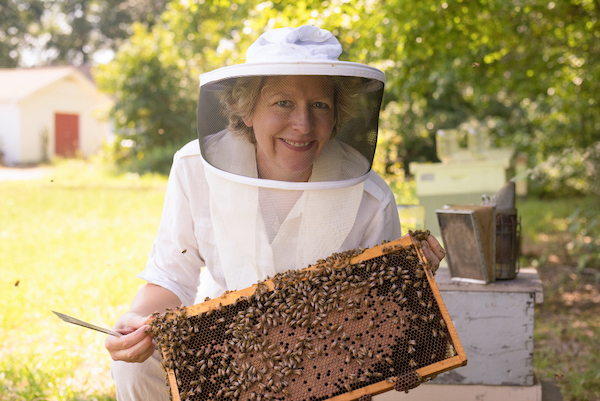
Jennifer Han is an Assistant Professor of Biology in the School of Science at Marist College. Her research focuses on plant-fungi-pest interactions, aiming to enhance sustainable agriculture and environmental health through biocontrol strategies. She previously served as faculty at Washington State University, where she developed fungi-based bee-safe pesticides and taught undergraduate and graduate courses.
- Ph.D. in Plant Biology, University of Illinois Urbana-Champaign (2014)
- B.L.A. in Landscape Architecture, University of Illinois Urbana-Champaign (2003)
Her research interests span plant biology, molecular genetics, mycology, and sustainable horticulture, with a strong emphasis on beneficial fungi and their applications in pollinator health. She investigates how fungal biocontrol agents, such as Metarhizium, can mitigate threats like the Varroa mite and honey bee viruses, offering environmentally safe alternatives to chemical pesticides.
Her recent publications highlight advancements in fungal biocontrol, papaya genomics, and pollinator protection, reflecting a multidisciplinary approach combining genetics, microbiology, and ecological design. The work demonstrates a consistent focus on sustainable solutions in agriculture and conservation.
- Extracts of Polypore Mushroom Mycelia Reduce Viruses in Honey Bees (2018)
- Directed evolution of Metarhizium fungus improves its biocontrol efficacy against Varroa mites in honey bee colonies (2021)
- Transcriptional regulation of dosage compensation in Carica papaya (2021)
Dr. Han has secured significant research funding, including a $1.6 million award from the Altman Foundation and multiple grants from the Washington State Department of Agriculture, supporting her work on bee health and fungal technology transfer. She actively mentors students and collaborates with industry and agricultural stakeholders.
She is a frequent invited speaker at beekeeping and mycology conferences, promoting public understanding of fungal applications in agriculture. Her outreach includes media interviews, podcasts, and educational workshops on sustainable pest management and pollinator conservation.