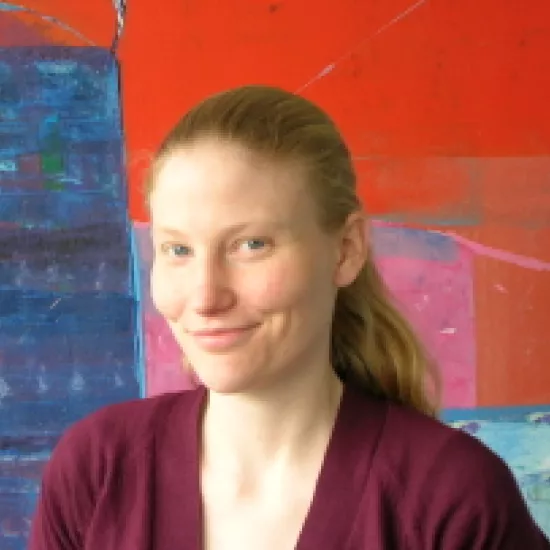
معرفی
Dr. Janet Werker is a Professor in the Department of Psychology at the University of British Columbia's Faculty of Arts, holding the prestigious Canada Research Chair position. Her internationally recognized work focuses on the perceptual foundations of language acquisition, with significant contributions spanning decades.
Her research explores how infants develop native language listening skills through biological constraints and experiential influences. Werker's investigations into speech perception milestones, cross-linguistic studies of infant phonetic discrimination, and the interplay between perceptual narrowing and language development have fundamentally shaped developmental cognitive science. Her work bridges experimental psychology, linguistics, and cognitive neuroscience to understand early language learning mechanisms.
Dr. Werker's scholarly impact is evidenced by over 100 publications in premier journals including Science, Nature, Trends in Cognitive Sciences, Proceedings of the National Academy of Sciences, Psychological Science, and Cognition.
- Killam Research Prize
- UBC Alumni Prize in the Social Sciences
- Jacob Biely Prize (UBC's premier research prize)
- Fellow of the Royal Society of Canada
- Fellow of the Canadian Psychological Association
- Fellow of the American Academy of Arts and Sciences
- Fellow of the American Psychological Society
- Fellow of the American Association for the Advancement of Science
As a Canada Research Chair holder, Werker has directed major research initiatives examining the developmental trajectory of language acquisition. Her laboratory has pioneered methodologies for studying infant perception through preferential looking paradigms and speech discrimination tasks across diverse linguistic environments. Current research continues to investigate the sensitive periods for language learning and the cognitive mechanisms underlying bilingual acquisition.
Dr. Werker actively contributes to the academic community through leadership roles in professional societies and editorial boards, mentoring the next generation of developmental scientists while maintaining a rigorous experimental research program that informs both theoretical models and practical applications in early language development.