معرفی
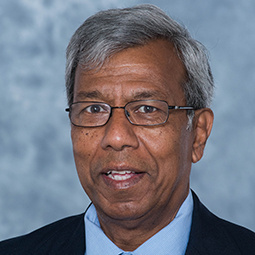
Jamil Khan serves as Associate Professor at the Department of Environmental and Energy Systems Studies within the Faculty of Engineering (LTH) at Lund University. He is also a Profile Area member for The Energy Transition and works as a researcher in Industrial Transformation and Sustainable Futures.
His academic background includes an MA in political science and a PhD in environmental and energy systems studies completed in 2004 with a thesis focusing on local politics of renewable energy.
Khan's research spans multiple interconnected fields at the intersection of environmental policy and societal development. His primary interests include environmental governance, policy implementation studies, renewable energy systems, sustainable transport, urban climate governance, sustainability transitions, and green political theory. A distinctive aspect of his work explores the critical links between welfare state development and sustainability transitions, examining how modern welfare states can reconcile legitimate citizen welfare demands with the need to reduce environmental impacts. His research investigates how societies might redefine welfare beyond traditional high-consumption models to create sustainable welfare systems that maintain quality of life while reducing material and energy use.
Analysis of his recent publications reveals a strong focus on practical applications of sustainability theory in Swedish contexts, with particular emphasis on urban settings, policy instruments, and the integration of social and ecological dimensions. His work consistently addresses the governance challenges of implementing sustainability transitions at local and regional levels.
Khan actively participates in multiple research networks and projects addressing climate neutrality and sustainable development challenges.
With over a decade of experience in research and teaching, Khan has supervised multiple graduate students and participates extensively in research projects. He currently leads the 'Lokal energigemenskap i samverkan' project funded by the Swedish Energy Agency and contributes to several major collaborative initiatives including 'Klimatneutrala städer 2030,' 'Urban Arena,' 'Bio+,' and 'LU Land.'
His work situates him at the nexus of academic research and practical policy development, particularly in the areas of energy transition, sustainable urban development, and the integration of social welfare with environmental sustainability goals.