معرفی
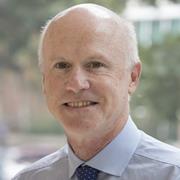
James P. Byrnes is a Professor in the Department of Psychological Studies in Education at Temple University's College of Education and Human Development, where he has served since 2004 after prior appointments at the University of Michigan and University of Maryland. An elected Fellow of the American Psychological Association's Division 15 (Educational Psychology), his research fundamentally addresses cognitive development and educational outcomes through the opportunity-propensity framework.
Dr. Byrnes' scholarly work centers on translating cognitive science into educational practice, with signature contributions in academic skill acquisition across mathematics, reading, and science domains. His opportunity-propensity framework systematically identifies factors driving racial and economic achievement gaps to inform targeted interventions. Recent investigations explore working memory mechanisms and attention deficit/hyperactivity disorder, extending his decades-long examination of adolescent risk-taking and critical thinking development.
Analysis of his 2016-2024 publications reveals sustained focus on meta-analytic reviews of early mathematics interventions, cross-cultural applications of the opportunity-propensity model, and working memory-achievement relationships. His work consistently bridges theoretical cognitive development with practical educational strategies, particularly through examinations of literacy development, science learning in early grades, and cultural influences on algebraic reasoning.
His scientific recognition includes:
- Elected Fellow of Division 15 (Educational Psychology) of the American Psychological Association (2002)
- Lindback Award for excellence in mentoring and teaching
Dr. Byrnes has secured substantial research funding from the National Science Foundation, National Institutes of Health, and U.S. Department of Education to advance his cognitive development research. His commitment to student development is evidenced by awards for mentoring graduate students and teaching advanced courses including Quantitative Analysis and Cognition in Education, reflecting his dual dedication to research excellence and pedagogical innovation.