معرفی
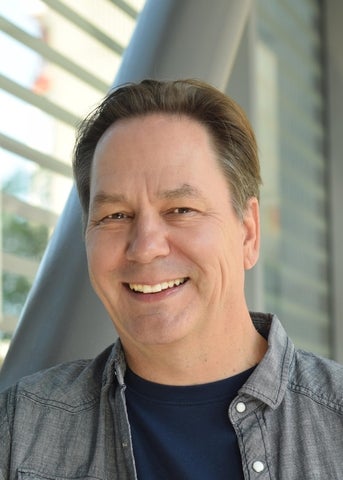
Dr James Mullaney is Senior Lecturer in Astrophysics at the University of Sheffield’s School of Mathematical and Physical Sciences. He also serves as the School’s Recruitment Lead and has built an active research group comprising three current PhD students.
Education
- MSci Physics and Astronomy, University of Nottingham (2000–2004)
- PhD Astrophysics, Durham University (2005–2008)
- Leverhulme-funded PDRA, Durham (2008–2010)
- European (FP7) Fellowship, CEA-Saclay, France (2010–2012)
- Leverhulme Early-Career Fellowship, Durham (2012–2013)
- Vice-Chancellor’s Fellowship, University of Sheffield (2013–2016)
- Lecturer (2016–present), subsequently promoted to Senior Lecturer, University of Sheffield
Research Interests
Dr Mullaney studies the co-evolution of galaxies and their central super-massive black holes. Using multi-wavelength observations from the world’s largest telescopes, he investigates how black-hole growth is triggered, how AGN feedback regulates star formation, and how powerful outflows redistribute energy and matter within galaxies. His work combines deep X-ray, sub-millimetre and infrared datasets to quantify the star-formation properties of AGN hosts and to map kiloparsec-scale winds that couple black-hole activity to galactic scales.
Research Output
With over 60 refereed papers (six exceeding 100 citations each), his recent work emphasizes ALMA and Herschel studies of star-formation in AGN hosts, NuSTAR high-energy surveys of obscured accretion, and machine-learning techniques for time-domain astronomy within the GOTO wide-field survey. These studies reveal a complex interplay between AGN luminosity and star-formation rate, the ubiquity of ionised and molecular outflows in luminous AGN, and new methods for identifying rapidly variable and transient phenomena.
Grants & Funding
- Co-Investigator on STFC Consolidated Grant for Sheffield Astrophysics (£1.2 M, 2015–2018)
- Leverhulme Trust, European FP7 and University strategic fellowships (2008–2016)
Teaching & Outreach
At Sheffield Dr Mullaney convenes the advanced undergraduate module PHY405 Galaxy Evolution and tutors first-year Mechanics and Optics. He has supervised numerous BSc and MPhys research projects and regularly delivers astronomy outreach to primary and secondary schools together with local amateur societies.
Research Team
His current group includes three PhD students—Emmanuel Bernhard, Liam Grimmet and Lydia Makrigianni—working on AGN host galaxies, feedback processes and time-domain data analysis.