معرفی
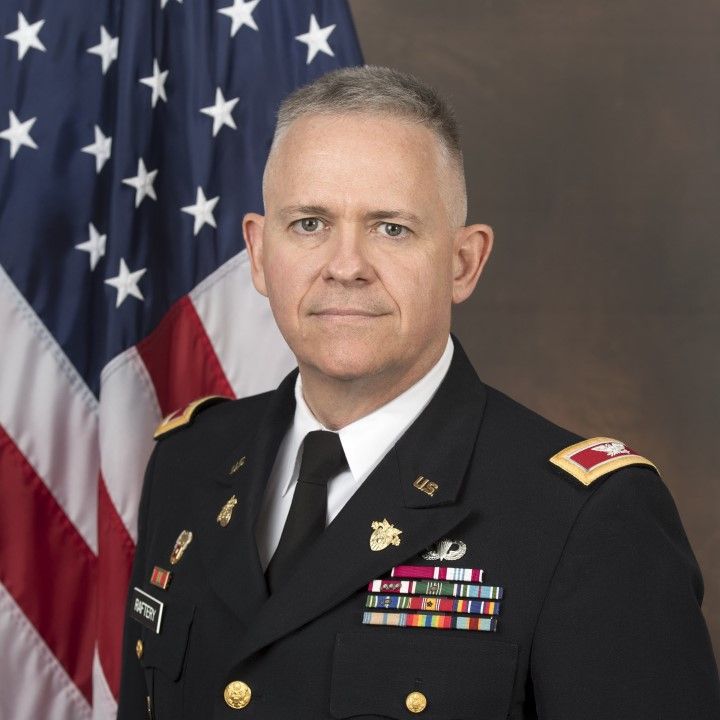
COL James J. Raftery serves as Professor and Head of the Department of Electrical Engineering and Computer Science at the United States Military Academy at West Point. A career U.S. Army officer with extensive military-academic integration, he bridges defense operations and engineering education through leadership roles including Photonics Research Center Director and Principal Associate Dean.
His educational credentials include:
- Ph.D. in Electrical Engineering, University of Illinois at Urbana-Champaign
- Master of Strategic Studies, U.S. Army War College
- M.S. in Electrical Engineering, University of Missouri-Columbia
- B.S. in Electrical Engineering, Washington University in St. Louis (Distinguished Military Graduate)
Raftery's research spans military-critical engineering domains including cyber operations, signal processing, and photonic systems. His work directly supports national defense through information warfare applications and optical technologies, reflecting his operational experience with the Cyber National Mission Force and Army Acquisition Corps. Leadership in the Photonics Research Center demonstrates applied focus on next-generation sensor and communication systems.
Professional honors include:
- Distinguished Military Graduate, Washington University in St. Louis
- Senior Member, Institute of Electrical and Electronics Engineers (IEEE)
- Member, Eta Kappa Nu (Electrical Engineering Honor Society)
- Member, Tau Beta Pi (Engineering Honor Society)
As department head, Raftery oversees academic programs integrating military training with engineering rigor. His DAWIA Level III certifications in Program Management and Science & Technology Management underpin substantial grant leadership from operational assignments including Product Manager for Information Warfare (2007-2010). Acquisition Corps experience enables strategic research funding acquisition bridging military requirements and academic innovation.
He directs West Point's Photonics Research Center and maintains connections with cyber operations teams through prior Cyber National Mission Force service, fostering collaborative defense-focused engineering projects within the Department of Electrical Engineering and Computer Science.