معرفی
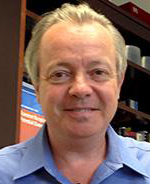
Jaime Garcia-Anoveros, PhD is a Professor at Northwestern University's Feinberg School of Medicine with joint appointments in Anesthesiology, Neuroscience, and the Ken and Ruth Davee Department of Neurology. His research spans multiple interdisciplinary centers including the Center for Genetic Medicine, Center for Translational Pain Research, Denning Ataxia Center, Hugh Knowles Center for Clinical and Basic Science in Hearing and Its Disorders, Northwestern University Clinical and Translational Sciences Institute (NUCATS), Simpson Querrey Institute for Epigenetics, and Skin Biology and Diseases Resource-Based Center.
Dr. Garcia-Anoveros earned his BS from UC Berkeley (1989), MA from Columbia University College of Physicians and Surgeons (1990), MPhil from Columbia University (1992), and PhD from Columbia University (1995). He completed postdoctoral training at Harvard Medical School and Massachusetts General Hospital in the Departments of Neurobiology and Neurology under David P. Corey.
His primary research focuses on the development of cochlear outer versus inner hair cells, auditory nociception (pain pathways in the ear), hyperacusis, hair cell degeneration and hearing loss, sensory organ development and degeneration, and specialized lysosomes in hair cells and neonatal enterocytes. His groundbreaking work has identified a novel pain pathway in the inner ear that acts as a "bodyguard" against hearing loss from loud noises and demonstrated how lysosomal dysfunction contributes to infant failure to thrive.
Dr. Garcia-Anoveros serves as a Permanent Member of the NIH AUD (Auditory System) study section (2020-present) and on the Editorial Board of F1000 Research (2012-present). His work has been published in top journals including Nature, Science Advances, Nature Communications, and PLOS Genetics.
- Bellucci Pioneer Award in Hearing Research, Bellucci Translational Hearing Center at Creighton University (2023)
As a principal investigator, Dr. Garcia-Anoveros has secured significant research funding from the National Institutes of Health, including grants from the National Institute of Deafness and Other Communication Disorders and National Institute of Neurological Disorders and Stroke. He is an active member of the Society for Developmental Biology, Association for Research in Otolaryngology, and Society for Neuroscience.
His laboratory focuses on understanding the genetic and molecular mechanisms underlying hearing development and disorders, with particular emphasis on TRPML3 channels and their role in sensory cells. Current research directions include developing tools for creating hearing cells lost in aging and understanding the logic circuit in cochlear neurodevelopment.