معرفی
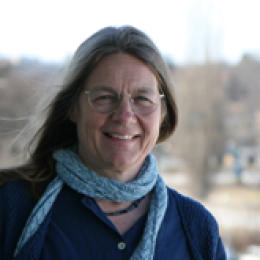
Ida Borg is a Researcher at the Department of Human Geography, Stockholm University. She is actively engaged in multiple research projects funded by the Swedish Research Council, focusing on housing, urban transformation, and segregation. Borg serves as Principal Investigator for the project "Renovation, Privatisation, and Conversion in the Rental Sector – What Are the Consequences?" (2022-2025) and is a key researcher in "Segregation Across Scales: The Role of Intergenerational Transmission, Residential Mobility, and Housing Construction" (2023-2029).
Her research interests span multiple dimensions of urban geography and housing studies, with a particular focus on:
- Spatial segregation and neighborhood effects
- Housing tenure dynamics and transformations
- Rental housing markets and policy
- Residential mobility patterns
- Vulnerability and life course trajectories
- Comparative housing systems across Europe
Analysis of Borg's recent publications reveals a consistent focus on the intersection of housing markets, spatial inequality, and social outcomes. Her work often employs longitudinal register data to track changes over time, with particular attention to how housing market transformations affect residential patterns, neighborhood composition, and social segregation. A significant portion of her research examines the Swedish context while also engaging in comparative European studies, especially regarding housing deprivation and welfare state design.
Borg has received recognition through multiple publications in reputable journals such as European Sociological Review, Advances in Life Course Research, and Journal of Housing and the Built Environment. Her methodological approach frequently combines quantitative analysis of large-scale register data with theoretical frameworks from human geography and welfare state studies.
In addition to her research activities, Borg is actively involved in teaching at Stockholm University, where she offers courses on population geography, housing segregation, social science methods, and GIS applications in human geography. She also serves as supervisor for Master's theses in Human Geography.