معرفی
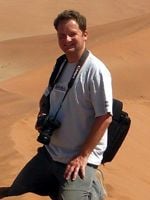
Ian Livingstone is Professor of Physical Geography and Programme Leader for the Postgraduate Certificate in Research Degree Supervision in the Graduate School at Regent’s University London. He has a long-standing academic career focused on aeolian processes, desert geomorphology, and research supervision pedagogy. His work bridges physical geography with academic development, contributing significantly to both scientific understanding and higher education practice.
- DPhil in Geography, University of Oxford (1986)
- BA (Hons) Geography, University of Oxford
His research interests center on the effects of wind on landscapes, particularly in arid environments. He specializes in aeolian sediment transport, dune dynamics, loess deposits, and the geomorphology of desert systems such as the Namib Sand Sea and Kalahari. His work integrates field studies, remote sensing, and sediment analysis to understand landscape evolution over time.
The most recent publications reflect a strong focus on aeolian sediment accumulation in complex terrains, luminescence dating techniques, morphometric analysis of dune fields using satellite data, and comprehensive reviews of aeolian geomorphology. These works demonstrate continuity in desert research while incorporating modern geospatial and chronological methods.
Ian Livingstone has supervised numerous PhD and MPhil students, many of whom have completed their degrees on topics related to dune dynamics, sediment transport, and environmental change. While no formal scientific awards are listed in the source material, his editorial role in a major textbook and sustained publication record indicate significant scholarly recognition.
He leads key modules in research degree supervision (ENVM501, ENVM502), emphasizing best practices in mentoring and academic development. His leadership in the Postgraduate Certificate in Research Degree Supervision highlights a commitment to improving research training standards. There is no mention of a specific lab or research team, but his collaborative publications suggest active engagement with the geomorphology research community.