معرفی
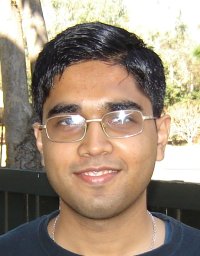
Iain Johnstone is the Marjorie Mhoon Fair Professor in Quantitative Science and Professor of Statistics and Biomedical Data Science at Stanford University. He holds appointments in both the Department of Statistics and the Department of Health Research and Policy (Biostatistics), where he conducts research at the intersection of theoretical statistics and biomedical applications.
Professor Johnstone's research focuses on statistical decision theory and wavelet-like methods in estimation theory, with applications to inverse problems and signal processing. His work spans asymptotic theory, simulation methodology, volume tests of significance, hazard rate estimation, and maximum entropy methods. He has made foundational contributions to wavelet shrinkage and thresholding methods that have become standard tools in nonparametric function estimation.
His publication record demonstrates consistent contributions to statistical methodology, particularly in wavelet analysis, sparse modeling, and high-dimensional data analysis. Over two decades, his research has evolved from theoretical wavelet thresholding to applications in principal component analysis and sparse regression methods, influencing both theoretical statistics and practical data analysis techniques.
Professor Johnstone has received significant recognition for his contributions to statistical science:
- Distinguished Alumni Award from Cornell University's Department of Statistical Science
- Guy Medal in Silver from the Royal Statistical Society
As a leading researcher in statistical methodology, Professor Johnstone has supervised numerous graduate students and postdoctoral researchers. His research has been supported by various grants that have enabled significant advances in statistical theory and its applications to biomedical and signal processing problems.
Professor Johnstone maintains an active research group focused on developing new statistical methodologies with applications in biomedical data science and signal processing. His team continues to explore the theoretical boundaries of high-dimensional statistical inference while developing practical tools for data analysis.