معرفی
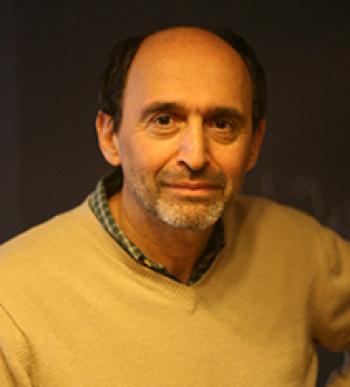
Hubert Bray is a Professor of Mathematics at Duke University, affiliated with the Trinity College of Arts & Sciences. His academic career spans differential geometry and general relativity, with significant contributions to understanding black holes and dark matter.
Dr. Bray earned his B.A. from Rice University in 1992 and his Ph.D. from Stanford University in 1997. His academic journey has positioned him as a leading researcher at the intersection of mathematics and theoretical physics.
Bray's research focuses on applying differential geometry to understand general relativity and using general relativity to motivate interesting problems in differential geometry. He is particularly known for his work on the Riemannian Penrose Conjecture, which concerns the mass of black holes, and for developing theories related to wave dark matter. His approach combines geometric ideas related to minimal surfaces, scalar curvature, conformal geometry, geometric flows, and harmonic functions.
Analysis of Bray's recent publications reveals a consistent focus on geometric analysis in the context of general relativity. His work spans pure mathematical investigations of scalar curvature and geometric flows, as well as applications to astrophysical phenomena like dark matter and galaxy formation. The interdisciplinary nature of his research bridges theoretical mathematics with observational astrophysics.
- National Science Foundation grant: Time Flat Curves and Surfaces, Geometric Flows, and the Penrose Conjecture (2014-2018)
- National Science Foundation grant: Scalar Curvature, the Penrose Conjecture, and the Axioms of General Relativity (2010-2014)
- National Science Foundation grant: Geometric Analysis Applied to General Relativity (2007-2010)
- National Science Foundation grant: Scalar Curvature, Geometric Flow, and the General Penrose Conjecture (2005-2008)
Professor Bray has supervised 13 Ph.D. graduates (11 in mathematics, 2 in physics) at Duke University from 2006 to 2023 and is currently advising 3 additional Ph.D. candidates in mathematics. His research group appears to focus on geometric analysis and its applications to theoretical physics, particularly in understanding the mathematical foundations of general relativity and dark matter phenomena.