معرفی
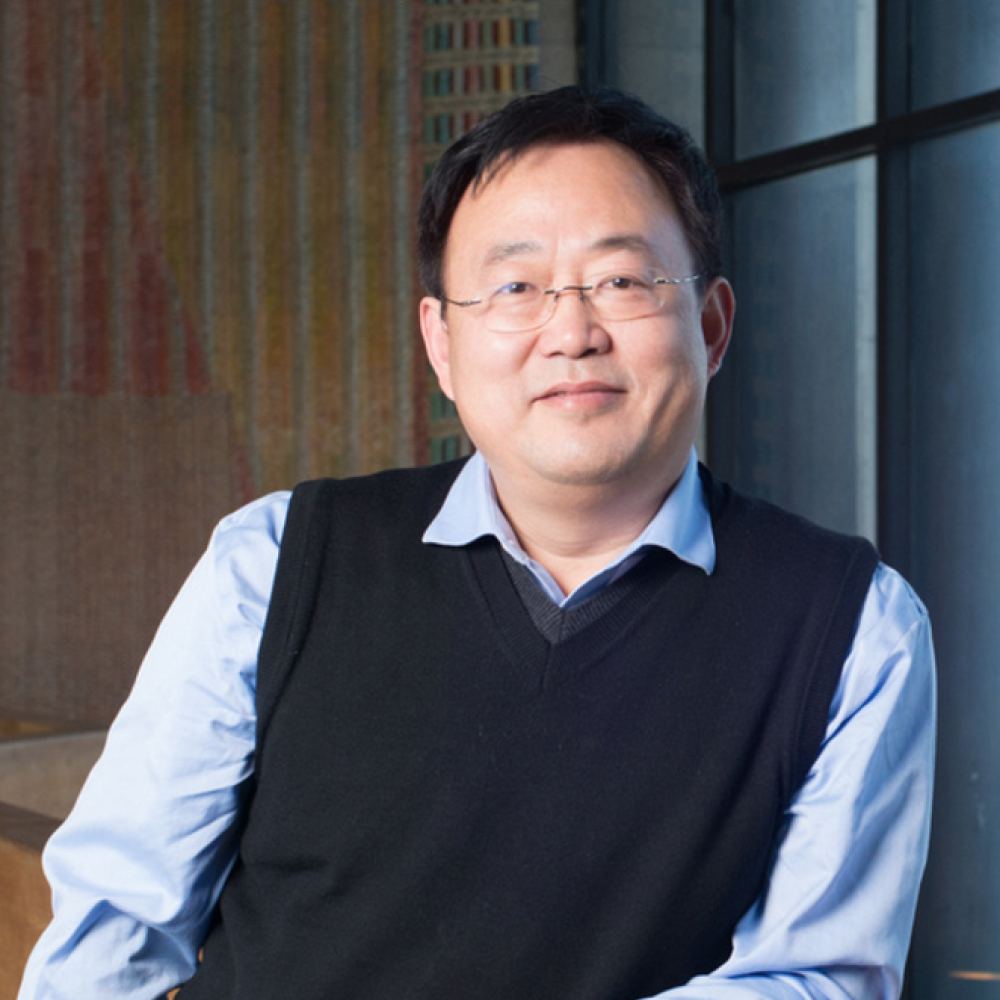
Huaiping Zhu is a Full Professor and York Research Chair (Tier I) in Applied Mathematics at York University's Department of Mathematics and Statistics within the Faculty of Science. He serves as Coordinator of Mathematical Biology, Director of the Laboratory of Mathematical Parallel Systems (LAMPS), and Director of the Center of Diseases Modeling (CDM) at York University.
Professor Zhu's research spans dynamical systems and Hilbert's 16th problem, bifurcation theory and applications, mathematical ecology and epidemiology, and climate change modeling. He develops mathematical models, theories, and methodologies for prevention and control of mosquito-borne diseases and other infectious diseases. His work has led to weather-based forecasting tools for vector mosquito abundance and risk assessment, climate change impact studies, and the user-friendly Ontario Climate Data Portal (OCDP) for climate adaptation support.
Analysis of Zhu's recent publications reveals a strong focus on mathematical modeling of infectious disease dynamics, particularly vector-borne diseases like dengue fever, West Nile virus, and avian influenza. His research integrates advanced mathematical techniques including fractional calculus and spatial modeling with practical applications in disease control, showing a growing trend toward incorporating machine learning approaches with traditional mathematical models for improved disease forecasting and intervention planning.
His scientific achievements include:
- York Research Chair (Tier I) in Applied Mathematics
Professor Zhu leads the Laboratory of Mathematical Parallel Systems (LAMPS) group, mentoring graduate students and researchers in mathematical biology. His development of the Ontario Climate Data Portal and weather-based disease forecasting tools indicates significant grant funding for public health applications, though specific grant details aren't provided in the source material.
Through his leadership of LAMPS and CDM, Professor Zhu directs interdisciplinary research combining mathematics, epidemiology, and climate science to develop practical tools for disease risk assessment and climate adaptation. His work on the Ontario Climate Data Portal demonstrates the translation of complex mathematical models into user-friendly resources for policymakers and public health officials.