معرفی
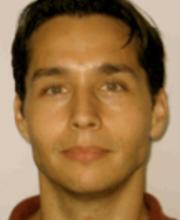
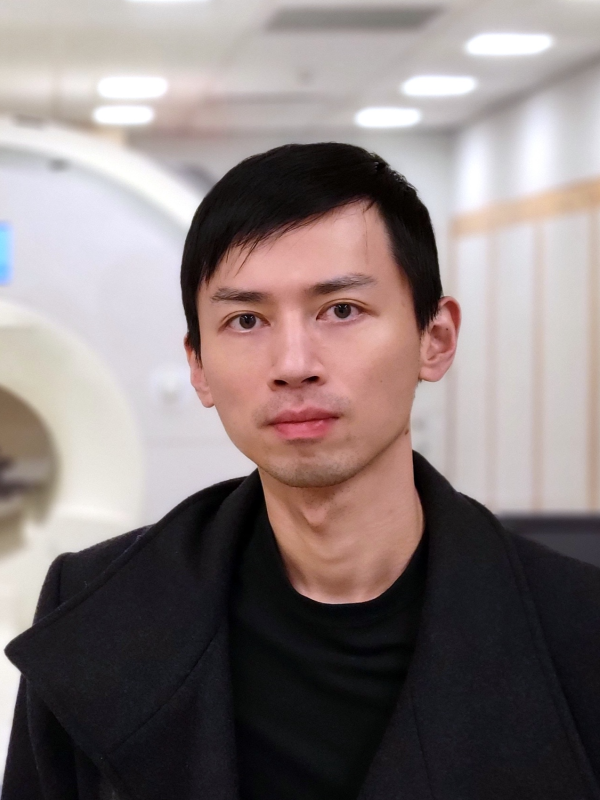
Hsin-Hung Li is an Assistant Professor in the Department of Psychology at The Ohio State University, specializing in computational and neural mechanisms of cognition. His research bridges cognitive neuroscience and computational modeling to investigate decision-making, attention, and working memory processes.
Education
- PhD, New York University, 2019
- MS, National Taiwan University, 2010
- BS, National Taiwan University, 2008
Dr. Li's research employs a triangulated methodology integrating computational modeling, fMRI/EEG neuroimaging, and behavioral experiments (psychophysics, eye tracking). His work reveals how attention enhances perceptual quality through spatial gain mechanisms, how working memory representations dynamically evolve in cortex, and how metacognitive confidence judgments violate Bayesian principles in complex decisions. Current projects investigate neural traveling waves in binocular rivalry and resource allocation in working memory systems.
Analysis of his 15 most recent publications (2019-2025) shows a strong trajectory toward understanding cortical population dynamics in cognition, with increasing focus on computational mechanisms (40% of articles), neural representations (35%), and metacognitive processes (25%). His work frequently appears in high-impact journals including Nature Human Behaviour, Neuron, and Science Advances.
Scientific Awards
- Swartz Foundation Postdoctoral Fellowships (2023)
- Pre-doctoral NRSA: Training Program in Computational Neuroscience (NIH) (2019)
- Student Travel Award, Annual Conference on Cognitive Computational Neuroscience (2017)
- Neukom Graduate Fellowships, Dartmouth College (2012)
- Taiwan Ministry of Education Study Abroad Scholarship (2011–2012)
Dr. Li actively recruits PhD students through the OSU Psychology Department and mentors undergraduate research assistants. His lab receives support from NIH training grants and institutional resources. Recent collaborations include work with Clayton Curtis (NYU) on working memory dynamics and Wei Ji Ma (NYU) on decision-making under uncertainty. The Li Lab maintains active partnerships with vision research centers including York University's Centre for Vision Research.
The Li Lab at OSU features state-of-the-art capabilities in computational modeling, fMRI analysis, and behavioral testing. Recent highlights include a Science Advances cover feature (2025) on working memory resource allocation, preprints on perceptual traveling waves (2025), and presentations at SfN 2024 and NIPS 2024 workshops. The lab emphasizes open science practices with public data sharing and reproducible analysis pipelines.