معرفی
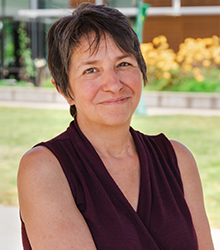
Hongli Li is a Professor in the Department of Educational Policy Studies at Georgia State University’s College of Education & Human Development. Her expertise lies in applied measurement and quantitative methods in education, with a focus on test validity, cognitive diagnostic modeling, and formative assessment. She has conducted extensive research on peer assessment dynamics, online learning environments, and assessment fairness. Dr. Li teaches advanced statistical methodologies such as structural equation modeling and item response theory. Her work has been funded by the Spencer Foundation and recognized through prestigious awards including the AERA Division H Outstanding Publication Award (2019) and the College of Education’s Outstanding Faculty Research Award (2022).
Education:
- Ph.D. in Educational Psychology, Pennsylvania State University (2011)
- M.A. in Teaching English as a Second Language, University of Illinois at Urbana-Champaign (2007)
- M.Ed. in International Business, Dongbei University of Finance and Economics (2001)
- B.A. in English for Science and Technology, Xi’an Jiaotong University (1998)
Research trends in her articles span educational assessment innovation, psychometric validation, and equity in testing. Over 15 years of publication history shows consistent focus on cognitive diagnostic modeling, DIF analysis, and meta-studies evaluating educational interventions. Her work bridges theoretical frameworks with practical applications in K-12 and higher education contexts.
Awards:
- AERA Division H Outstanding Publication Award (2019)
- College of Education & Human Development’s Outstanding Faculty Research Award (2022)
Teaching and grants: Leads quantitative methods courses and has collaborated on initiatives like the Center for the Study of Adult Literacy. No formal advising list provided but contributes to graduate training through course instruction and research mentorship. Active in interdisciplinary research teams within the College’s centers such as the Adult Literacy Research Center and the Center for Research on Atypical Development and Learning.