معرفی
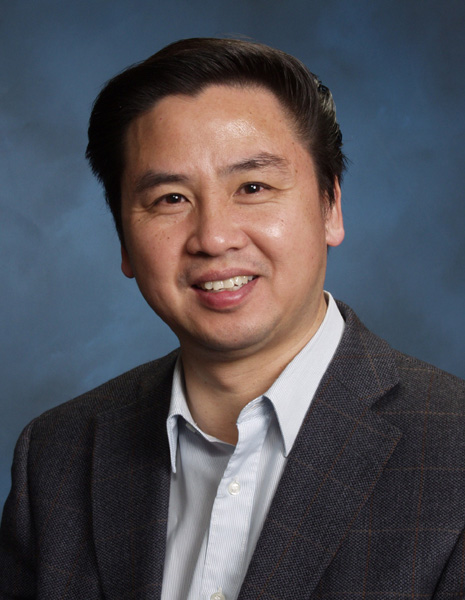
Hongjie Dai is the J.G. Jackson and C.J. Wood Professor of Chemistry at Stanford University, part of the School of Humanities and Sciences. His research bridges chemistry, physics, materials science, and biomedical engineering, focusing on nanomaterials, energy storage, and nanomedicine. He leads the Dai Laboratory, renowned for innovations in carbon nanotubes, NIR-II imaging, and electrocatalysis.
- Education: B.S. Physics (Tsinghua, 1989), M.S. Applied Sciences (Columbia, 1991), Ph.D. Applied Physics/Physical Chemistry (Harvard, 1994)
- Postdoctoral Training: Harvard (Charge density waves) and Rice (Carbon nanotubes)
Research interests include carbon nanomaterials synthesis, nanoelectronics, nanomedicine, and energy technologies. Key innovations include NIR-II fluorescence imaging, ultra-sensitive diagnostic assays, and fast-charging aluminum batteries. Recent work emphasizes molecular gold clusters for bioimaging, plasmonic-enhanced sensors, and rechargeable Na/Cl₂ batteries.
Publications span nanotechnology, energy storage, and biomedical applications, with trends toward clinical translation of imaging tools and sustainable battery systems. Over 150 articles highlight his interdisciplinary approach.
- Notable Awards: ACS Pure Chemistry Award, APS McGroddy Prize, NAS/NAM membership
Grants and advising focus on lab-driven projects in nanomaterials and energy. The Dai Lab collaborates on advanced imaging, electrocatalysis, and medical diagnostics, with affiliations to Stanford's ChEM-H, SSRL, and CMAD.
Lab activities include nanomaterial synthesis, NIR-II imaging systems, and electrochemical device development. Teams work on translating lab innovations into clinical and industrial applications.