معرفی
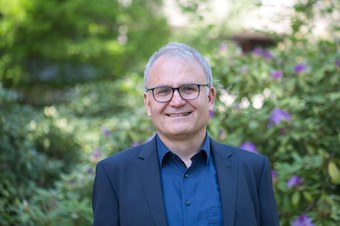
Helmut Breitmeier has been Professor of International Relations at the Institute of Political Science, Justus Liebig University Giessen, since 2013. In parallel he serves on the project management board of the DAAD-funded SDGnexus Network (since 2020), on the board of directors of the LOEWE Cluster “Minority Studies: Language and Identity” (since 2019) and on the board of the Center for international Development and Environmental Research (ZEU) at JLU (since 2019). From 2008-2013 he was Professor of Political Science at the Open University Hagen, and previously held positions at TU Darmstadt, University of Stuttgart, University of Mannheim and the International Institute for Applied Systems Analysis (IIASA).
Education
- 1994 – Dr. phil., University of Tübingen (dissertation on formation of global environmental regimes)
- 2004 – Habilitation & Venia Legendi, TU Darmstadt (topic: legitimacy of international regimes)
- M.A. Political Science & Contemporary History, University of Tübingen / Uppsala University
Research Interests
Prof. Breitmeier’s work centres on global governance and the effectiveness and legitimacy of international institutions. He analyses how state and non-state actors jointly address global problems, with particular attention to:
- Environmental and climate governance (international regimes, regime effectiveness, compliance)
- Food system governance (sustainability norms, SDG 2 implementation, regime complexity)
- Transnational security threats (climate-conflict nexus, prevention of violence)
- Role of religion and non-state actors in global politics
- Methodological focus on quantitative and qualitative comparative regime analysis
Across these themes he investigates questions of democratic legitimacy, distributive justice and policy learning.
Publication Profile
His recent peer-reviewed articles (2021-2009) map the evolution of global sustainability governance. Collectively they trace how inter-institutional arrangements align (or misalign) norm understandings on food security and climate change, how non-state actors enhance or challenge regime legitimacy, and how quantitative regime analysis can assess problem-solving effectiveness and equity. The work combines large-n database analysis (International Regimes Database) with case-based inquiry, producing policy-relevant insights for scholars and practitioners.
Grants & Scientific Service
- Project Management Board, DAAD “exceed” SDGnexus Network (2020-)
- Board of Directors, LOEWE Cluster “Minority Studies” (2019-)
- Board Member, Center for international Development and Environmental Research (ZEU) (2019-)
- Chair, Doctoral Committee Faculty 02 (2015-2020)
- Deputy Chair, Development and Peace Foundation (SEF) (2015-2020)
- Member, Scholarship Selection Committee, German Federal Foundation for Ecology (2008-2013)
Teaching & Supervision
At JLU he teaches undergraduate and graduate courses on global governance, climate politics, the United Nations, minority issues and development theory. He supervises bachelor and master theses and emphasises early, structured consultation with students.