معرفی
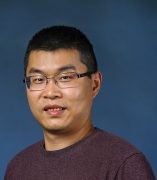
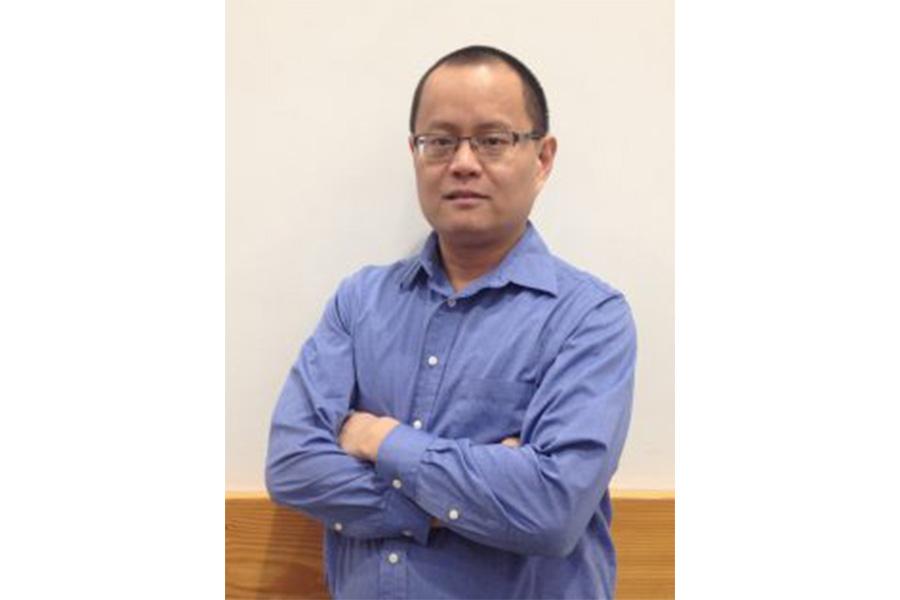
Hawk Bo Wang is an Assistant Professor in the Department of Computer Science at the University of Mississippi (Ole Miss). His research focuses on computer vision and deep learning, with particular emphasis on enhancing model robustness and generalization for human-centric applications. Dr. Wang maintains an active research program with publications consistently appearing at top-tier conferences including CVPR, ICCV, ECCV, and NeurIPS.
Dr. Wang earned his PhD from the School of Computing at the University of Utah. Before joining academia, he accumulated nearly a decade of industry research experience at GE Global Research, Tencent US, and CtrsVision, providing him with valuable real-world perspective on AI deployment challenges.
His research interests center on computer vision and deep learning, specifically addressing model robustness and generalization for human pose estimation and human-object interaction (HOI). Dr. Wang investigates how to make models perform reliably in challenging real-world conditions including low-light environments, occlusions, and with unseen object categories.
Analysis of Dr. Wang's recent publications reveals a strong trajectory in human-centric computer vision research. His work demonstrates increasing sophistication in handling challenging scenarios, with recent papers focusing on zero-shot learning for HOI detection, domain adaptation for low-light pose estimation, and few-shot learning approaches. Many of these papers have been accepted at premier venues ranked among the top in computer vision and AI research.
Dr. Wang's contributions to the field have been recognized through:
- Outstanding Reviewer Award at WACV 2024
- Outstanding Reviewer Award at ECCV 2022
Dr. Wang serves as an Area Chair for ECCV 2024 and regularly participates in program committees for major conferences including CVPR, ICCV, ECCV, and AAAI. He actively mentors students and welcomes prospective PhD candidates interested in computer vision research to contact him with their materials. His research addresses the critical gap between model performance on curated benchmarks and real-world effectiveness, making significant contributions to practical AI deployment.