
معرفی
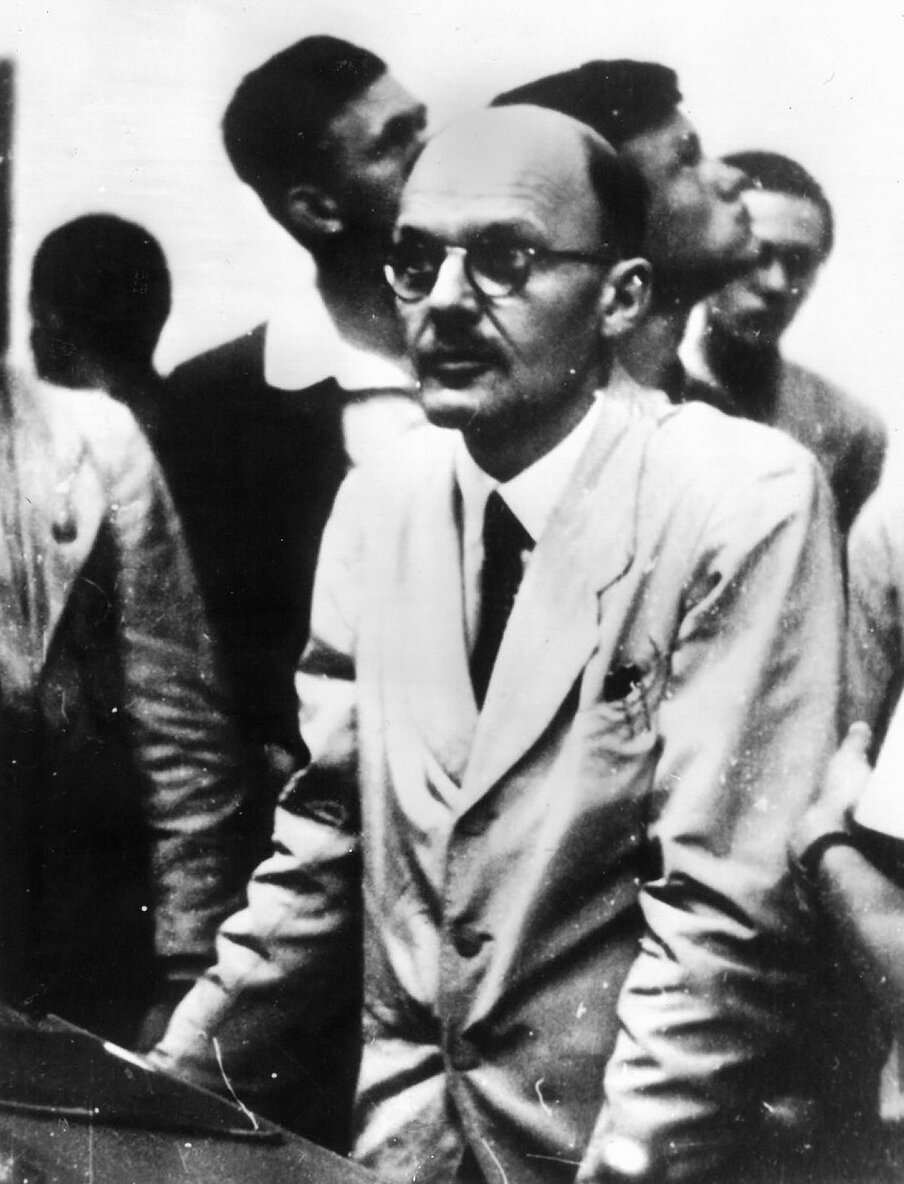
Hans Geiger was a renowned German physicist and professor, best known for inventing the Geiger-Müller counter in 1929. He held professorships at Kiel University (1925), Tübingen University (1929), and later became director of the Physics Institute at Technische Hochschule Berlin (1936). His work focused on experimental physics, particularly in radiation measurement and radioactive decay processes.
Geiger studied at the University of Erlangen (1901-1906), earning a PhD on radioactive emissions. He collaborated with Ernest Rutherford in Manchester (1907-1912), co-authoring seminal work on alpha particle counting. His academic career included roles at the Physikalisch-Technische Reichsanstalt (PTR) in Berlin and teaching at Technische Hochschule Berlin.
His research interests centered on experimental methods in nuclear physics, leading to breakthroughs like the statistical nature of radioactive decay and the Geiger-Müller counter, which revolutionized radiation detection. Despite his contributions, his later years were marked by involvement in Nazi-era physics research and personal struggles.
Geiger was celebrated internationally for his inventions, with Albert Einstein calling his counter 'humankind’s most sensitive organ.' He passed away in Potsdam in 1945.
Hans Geiger در سایتهای دیگر
جستوجوهای مرتبط
شاید اینها هم برایتان مناسب باشند
 Marc Oliver LöwnerTechnical University of Berlin (TU Berlin) · پژوهشگر
- AAlexander Viktorovich KarpovTechnical University of Berlin (TU Berlin) · استادیار
 Anke HagemannTechnical University of Berlin (TU Berlin) · استاد
 Iwan RudiartoTechnical University of Berlin (TU Berlin) · استاد
 Tim PolzehlTechnical University of Berlin (TU Berlin) · پژوهشگر
- EEdith ElkindTechnical University of Berlin (TU Berlin) · استاد