معرفی
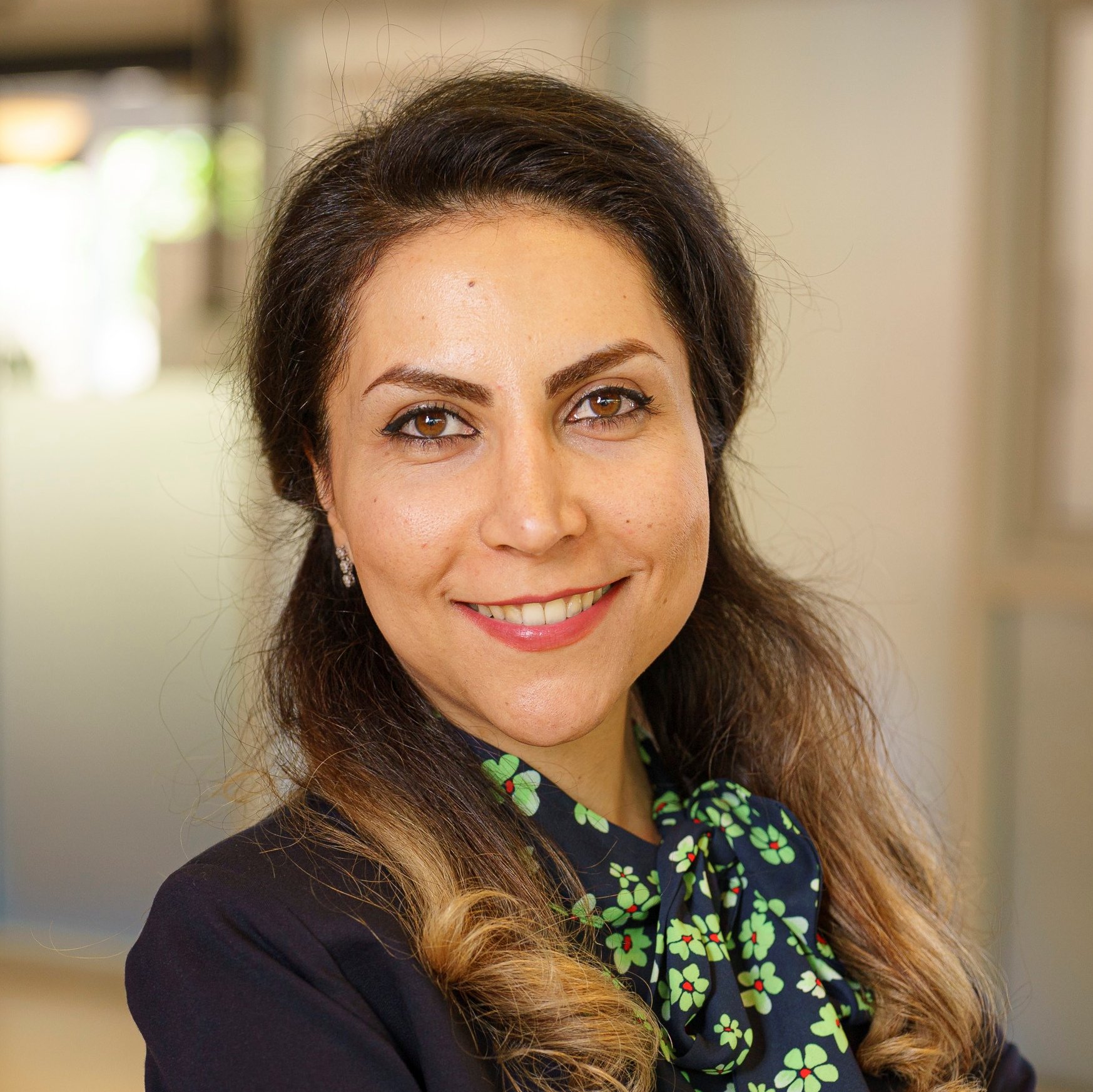
Hanieh Bazyar is a tenure-track Assistant Professor in the Department of Chemical Engineering at Delft University of Technology (TU Delft), Faculty of Applied Sciences. She leads the BazyarLab, focusing on Transport Phenomena within the Climate Action program. Her research addresses critical challenges in environmental sustainability through innovations in CO2 capture, green hydrogen production, microfluidics, and wastewater treatment.
She earned her Bachelor’s and Master’s degrees in Materials Science and Engineering from Shiraz University, followed by a PhD at the University of Twente (2020) in soft matter, fluidics, and interfaces, where she developed slippery liquid-infused membranes for wastewater treatment. After a postdoctoral position at TU Delft in the Process and Energy Department, she began her tenure track in 2021.
Her research interests span membrane separation, smart membranes, microfluidics, electrochemical CO2 capture, wetting and surface properties, green hydrogen production, anion exchange membranes, biofouling mitigation, and separation-sensing platforms. She integrates materials science, electrochemistry, and fluid dynamics to develop responsive and adaptive systems for real-world applications.
While no specific publications are listed in the provided texts, her research portfolio indicates a strong focus on developing novel redox-active carrier electrodes, stimuli-responsive gating membranes, enhanced anion exchange membranes for water electrolysis, and self-cleaning smart meta membranes. Her work also includes portable microfluidic devices such as a 'forensics-on-a-chip' and in-situ sensor-on-a-chip platforms for cell-culture monitoring.
- Novel redox-active carrier electrodes for electrochemical carbon capture
- Smart gating membranes for precise gas transport control
- Anion exchange membranes with improved ion conductivity and stability
- Microgel-based etalon membranes for separation-sensing integration
- Piezoelectric actuator-integrated membranes for anti-fouling
- Self-cleaning microfiltration membranes to combat (bio)fouling
Hanieh Bazyar supervises a dynamic research group including PhD candidates such as Georgia Kontaxi and Irem Gurbuz, and has hosted numerous MSc and BSc students. She teaches the thermodynamics component of the Separation Technology course to second-year Bachelor students in the Molecular Science and Technology (MST) program and has designed an elective MSc course on 'separation techniques for renewable processes'. She collaborates with mechanical engineers on actuator design and membrane integration projects. Her lab, BazyarLab, actively offers thesis opportunities in themes including mechanical agitation effects on fouling, smart self-cleaning membranes, and next-generation in-situ sensors for organ-on-chip systems.
The BazyarLab develops advanced materials and technologies aimed at bridging scientific discovery with practical, sustainable solutions. Key initiatives include:
- CO2 Capture: Electrochemical carbon capture using redox-active carriers and smart gating membranes
- Green H2 Production: Alkaline membrane water electrolysis with enhanced anion exchange membranes
- Microfluidics: Separation-sensing platforms and portable 'forensics-on-a-chip' devices
- Wastewater Treatment: Smart meta membranes with self-cleaning capabilities to counteract fouling
حوزههای پژوهشی