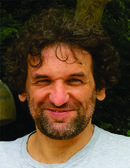
معرفی
Hajime Hirase is a Professor at the Center for Translational Neuromedicine within the Faculty of Health and Medical Sciences at the University of Copenhagen. His research focuses on astrocytic signaling and its impact on neural circuit dynamics and behavioral performance.
His educational background is not explicitly stated in the provided text, but he leads the Hirase Lab: Division of Neuron-Glia Circuitry, which develops advanced tools for neuroscience research.
Dr. Hirase's research interests span multiple areas of neuroscience with a particular emphasis on astrocyte function. His work explores how astrocytes influence neural circuits, cerebral blood flow, and behavioral outcomes. He has made significant contributions to understanding the glymphatic system, neuron-glia interactions, and the role of astrocytes in sleep physiology and emotional regulation. His laboratory has developed numerous genetic tools including fluorescent blood AAVs (pAAV-P3-Alb-mNG, pAAV-P3-Alb-mScarlet) and astrocyte markers/biosensors that are available through Addgene and viral vector cores worldwide.
Analysis of his recent publications reveals a strong focus on the intersection of astrocyte biology, neural circuit dynamics, and neurovascular coupling. His work consistently demonstrates how astrocytic signaling mechanisms influence broader brain functions including sleep-wake cycles, anxiety regulation, and seizure control. The research employs cutting-edge imaging techniques and genetic tools to investigate these complex systems.
Dr. Hirase maintains active collaborations with prominent researchers including Maiken Nedergaard, as evidenced by multiple co-authored publications in high-impact journals such as Cell, PNAS, and Cell Metabolism. His work has received significant attention in the scientific community with several papers accumulating substantial citations and media coverage.
His laboratory has developed important research resources including fluorescent blood AAVs, CRISPR AAVs, and astrocyte biosensors that are widely shared with the neuroscience community through Addgene and viral vector facilities. These tools have enabled researchers worldwide to study neurovascular and astrocyte functions with greater precision.