معرفی
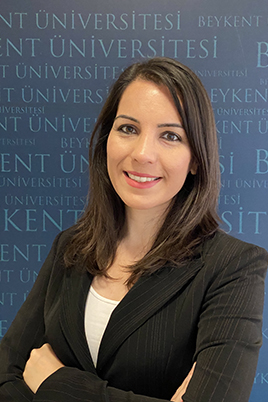
Dr. Hadis Khakbaz is a Casual Senior Research Assistant & Postdoctoral Research Fellow at the University of Queensland's School of Mechanical and Mining Engineering, where she conducts research within the Centre for Advanced Materials Processing and Manufacturing (AMPAM). Her work bridges materials science, mechanical engineering, and biomedical applications, with a focus on developing innovative material solutions for various industrial and medical needs.
Dr. Khakbaz earned her Bachelor of Chemical Engineering from Isfahan University of Technology, followed by a Master's degree in Chemical Engineering from Tehran University. She completed her PhD at the University of Wollongong's Intelligent Polymer Research Institute, where she focused on developing nano-filled bio-thermoplastics as print media for 3D additive fabrication.
Her research interests span multiple domains of materials science, with particular expertise in additive manufacturing, nanocomposites, polymer processing, thermal conductivity enhancement, tribological properties, and electrochemical corrosion. A significant portion of her recent work has focused on advancing flexible printed zinc-ion batteries, which represents an important innovation in next-generation flexible electronic devices. Her research also extends to biodegradable materials for medical implants, where she has made contributions to magnesium and zinc alloy scaffolds for bone fixation devices.
Analysis of Dr. Khakbaz's publication record reveals a strong focus on polymer nanocomposites and their applications in both biomedical and industrial contexts. Her work demonstrates consistent progression from fundamental material characterization to application-specific development, with increasing emphasis on sustainable and biodegradable materials. Recent publications show growing interest in radiation shielding applications and thermal management solutions using advanced composite materials.
Dr. Khakbaz has demonstrated commitment to academic mentoring and is available for supervision of graduate students. Her collaborative approach is evident in her extensive co-authorship across multiple disciplines, working with researchers in fields ranging from biomedical engineering to nuclear materials science.
Her research is primarily conducted through the Centre for Advanced Materials Processing and Manufacturing (AMPAM) at the University of Queensland, where she contributes to multidisciplinary teams working on cutting-edge material solutions. This environment provides access to state-of-the-art facilities for materials characterization, additive manufacturing, and mechanical testing, supporting her diverse research portfolio.