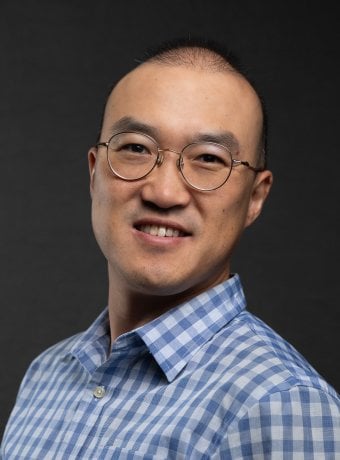
معرفی
Dr. Gunes Uzer is an Assistant Professor in the Department of Mechanical and Biomedical Engineering at Boise State University, where he joined in 2016. His research focuses on the mechanical control of stem cell structure, function, and fate, with particular emphasis on how mechanical signals influence cellular behavior in bone and tissue development. His work has earned him an h-index of 24 with 1,812 citations across 81 research outputs.
Dr. Uzer received his academic training at Stony Brook University in New York, where he earned both his Ph.D. in Biomedical Engineering (2013) and M.S. in Mechanical Engineering (2008). Prior to joining Boise State, he completed postdoctoral research at the University of North Carolina at Chapel Hill and served as a Research Associate at the University of North Carolina at Charlotte.
Dr. Uzer's research program investigates how mechanical forces regulate stem cell behavior, particularly focusing on the nucleus-cytoskeleton connection through the LINC complex. His work spans multiple areas including mechanobiology, stem cell differentiation, bone development, adipogenesis, and the effects of microgravity on cellular function. He employs advanced techniques like live cell imaging, atomic force microscopy, and computational modeling to understand how physical forces translate into biochemical signals that determine cell fate. His fingerprint analysis shows strong activity in Stem Cell (100%), Actin (44%), Cytoskeleton (34%), and Mesenchymal Stem Cell Engineering (33%) research areas.
His publication record shows a strong trajectory with recent work demonstrating increasing focus on nuclear mechanics, stem cell aging, and space-related biomedical research. The 15 most recent publications reveal a consistent theme of investigating how mechanical forces, particularly through the LINC complex and nuclear architecture, regulate stem cell differentiation and function in bone and adipose tissue contexts.
Dr. Uzer has received several prestigious awards for his research:
- NASA New York City Research Initiative (NYCRI) Achievement Award (2009)
- President's Poster Award from the American Society of Bone and Mineral Research (2013)
- Young Investigator Travel Award from Stem Cells Journal (2016)
Dr. Uzer has secured significant research funding from the National Science Foundation and NIH, including active projects focused on developing advanced microscopy systems for cellular imaging, creating 3D bone marrow analogs to study mechanical signals in microgravity, and investigating organoid-directed muscle control. His work on microgravity effects on cell nucleoskeleton was awarded a National Space Biomedical Research Institute Fellowship, and he also received funding from The Scientific and Technological Research Council of Turkey to study stem cell aging. His research contributes to UN Sustainable Development Goals related to health and well-being.
Dr. Uzer leads a research laboratory focused on mechanobiology and stem cell engineering, collaborating with researchers across multiple institutions. His lab utilizes cutting-edge equipment including atomic force/confocal optical microscopes, vibrational systems for microgravity studies, and computational modeling tools to advance understanding of how physical forces influence cellular behavior in health and disease contexts.