معرفی
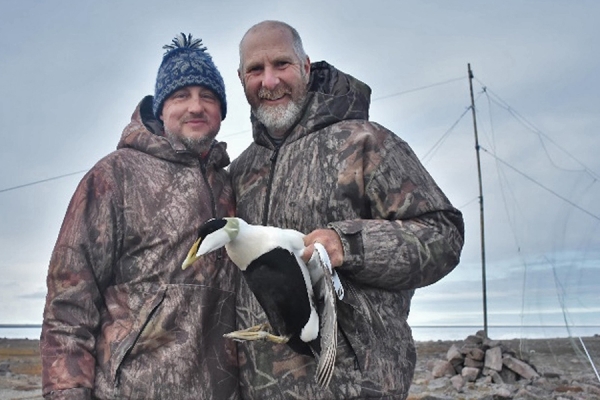
Gregory W. Thiemann is an Associate Professor in the Department of Biology, Faculty of Science at York University. He is actively involved in research and graduate supervision, focusing on Arctic carnivore ecology and conservation. His work bridges scientific analysis with environmental monitoring in northern ecosystems.
His research interests center on foraging ecology, behavioural ecology, and wildlife conservation, particularly in the context of climate change. He employs advanced techniques such as fatty acid signature analysis to investigate the diets of top predators like polar bears and ringed seals. His work helps define food web structures and track ecosystem changes in the Arctic, contributing to both scientific understanding and conservation policy.
The recent publications show a strong focus on Arctic marine mammals, predator-prey dynamics, climate impacts on sea ice habitats, and the integration of Traditional Ecological Knowledge. His research spans methodological development, physiological ecology, and applied conservation, with a consistent emphasis on the Canadian Arctic. Multiple studies involve York University graduate students, indicating active mentorship.
While no formal scientific awards are listed in the provided text, his publications appear in high-impact journals such as Global Change Biology, Polar Biology, and PLoS ONE, reflecting strong scholarly recognition. He collaborates with researchers from various institutions across Canada and the United States.
Dr. Thiemann advises several graduate students, including T.R. Ross, M.P. Galicia, K. Florko, L. Sciullo, and B.J. Laforest, many of whom are co-authors on his recent publications. Although specific grants are not mentioned, his sustained research output suggests active funding. His work often involves fieldwork in remote Arctic regions and collaboration with northern Indigenous communities.
While no specific lab or research team name is provided, his research group can be inferred from his publication co-authors, particularly his graduate students and collaborators at Fisheries and Oceans Canada and other Canadian institutions. His work is highly interdisciplinary, combining ecology, physiology, biogeochemistry, and social-ecological systems.