معرفی
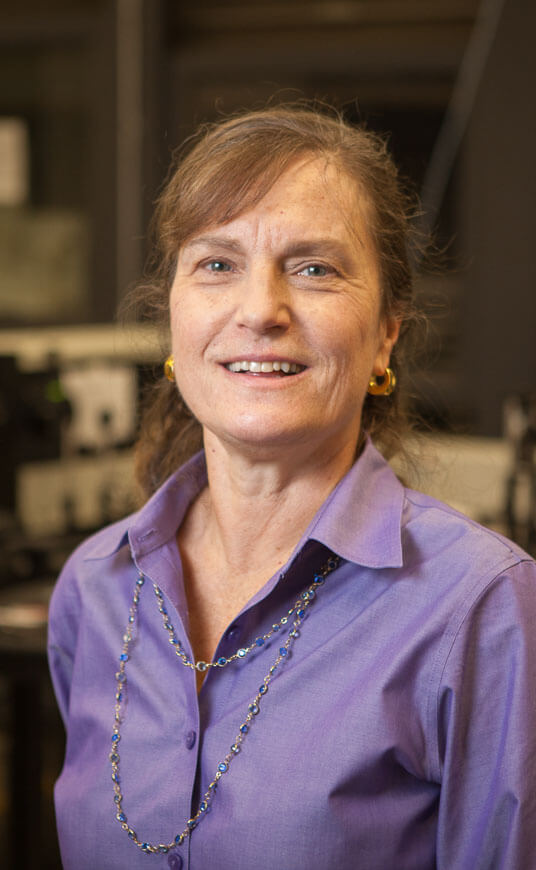
Gregg Dieckmann is an Associate Professor in the Department of Chemistry and Biochemistry within the School of Natural Sciences and Mathematics at The University of Texas at Dallas. He has been a faculty member since 1999, advancing from Assistant Professor to Associate Professor in 2005, and currently serves as Associate Head of the department. His research integrates protein engineering and nanotechnology to develop model systems for understanding biological complexity and creating novel bio-nano hybrid materials.
- Ph.D. in Chemistry, University of Michigan, 1995
- M.S. in Chemistry, University of Michigan, 1995
- B.A. in Chemistry, DePauw University, 1988
- B.A. in Computer Science, DePauw University, 1988
His research interests lie at the intersection of inorganic chemistry, protein design, and bionanotechnology. He investigates how engineered protein motifs can be used to functionalize carbon nanotubes noncovalently, control metal reactivity in zinc sites, and probe DNA-binding domains for gene regulation and repair. His lab emphasizes integrative approaches that combine synthetic biology, biophysical characterization, and computational modeling to design functional peptide systems.
The recent publications highlight a strong trend in peptide-mediated nanomaterial engineering, particularly focusing on carbon nanotube dispersion, cellular uptake, electronic property modulation, and toxicity assessment. These works collectively demonstrate expertise in molecular dynamics simulations, peptide design, and nanobio interactions, contributing significantly to both fundamental science and potential biomedical applications.
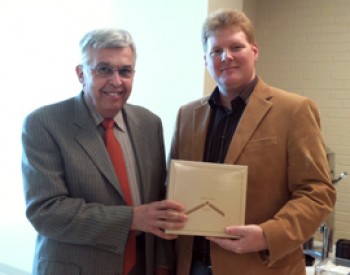
Dr. Dieckmann has been recognized with several prestigious teaching awards:
- Regents’ Outstanding Teaching Award, UT System (2018)
- Faculty Teaching Award, School of Natural Sciences & Mathematics (2016)
- Faculty Teaching Award, School of Natural Sciences & Mathematics (2011)
He has actively advised numerous graduate students at both Master’s and doctoral levels, guiding research on reversible cyclic peptides, carbon nanotube interactions, protein-metal binding, and peptide design. His work has been supported by substantial grants from the Department of Defense, Semiconductor Research Corporation, and the Human Frontier Science Program, totaling over $2 million, with projects focused on nanoparticle toxicity, cancer nanotechnology, and targeted cell ablation.
The Dieckmann Lab operates as an interdisciplinary research team, combining expertise in chemistry, biochemistry, computational modeling, and materials science to advance the frontiers of bionanotechnology and bioinorganic systems.