معرفی
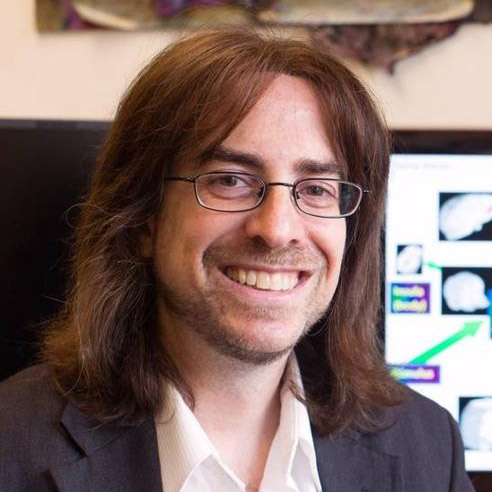
Greg Siegle is an Associate Professor in the Department of Psychiatry at the University of Pittsburgh School of Medicine, with affiliations in the Center for the Neural Basis of Cognition and the Clinical and Translational Sciences Institute (CTSI). He directs the Program in Cognitive Affective Neuroscience (PICAN) and holds a Ph.D. from the San Diego State University/UCSD Joint Doctoral Program in Clinical Psychology. His research focuses on neural mechanisms underlying rumination, dissociation, and emotional disorders such as depression, PTSD, and autism, employing fMRI, EEG, and computational modeling. He develops interventions like Cognitive Control Training to target specific brain mechanisms and improve treatment outcomes. His work bridges basic neuroscience and clinical practice, emphasizing precision in diagnosis and treatment.
Education:
- Ph.D., Clinical Psychology, San Diego State University/UCSD Joint Program
Siegle investigates how sustained emotional processing disrupts cognitive and neural systems in psychopathology. His projects include understanding prefrontal-limbic interactions in depression, translating neuroimaging findings into clinical tools, and developing targeted therapies. He explores topics like pupil dilation as a biomarker of treatment response, the role of reward processing in late-life depression, and developmental changes in emotional processing during puberty.
Labs & Collaborations:
He leads the PICAN lab, offering opportunities for postdocs, undergraduates, and research assistants. Collaborations include work on virtual reality exposure paradigms, Emotiv headset processing, and functional connectivity tools. His lab develops software for data analysis, including the Functional Connectivity Toolbox and pupilometry tools.
Grants & Software:
- Developed grants database templates for biosketch formatting
- Code for processing pupillary data, ASL5000 pupil data, and waveform comparisons
Future Work:
Focuses on translating neuroimaging insights into low-cost clinical tools, enhancing treatment personalization, and exploring mechanisms of sustained vs. blunted affective processing across disorders. He also advocates for rigorous standards in neuroscience reporting (e.g., COBIDAS guidelines).