معرفی
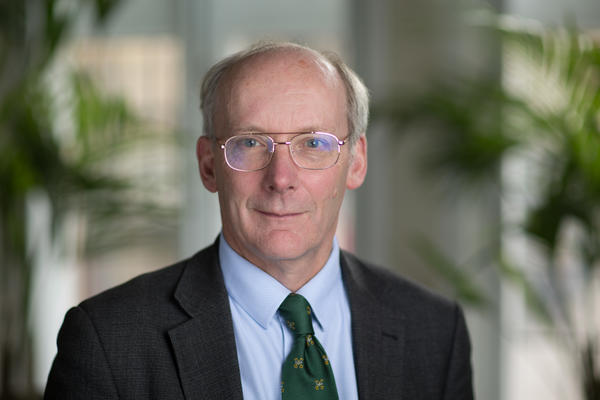
Professor Godfray Hugh Charles Jonathan serves as the Hope Professor in the Department of Zoology at the University of Oxford. His distinguished academic career spans over three decades with significant leadership roles including Director of the NERC Centre for Population Biology (1999-2006) and Head of the Division of Biology (2004-2006) at Imperial College London. He has established himself as a leading figure in ecological and evolutionary sciences with substantial contributions to both theoretical and applied aspects of his field.
Research Expertise:
- Population and community ecology with emphasis on host-parasitoid systems
- Evolutionary biology of insect systems
- Entomology with focus on aphids, Drosophila, and vector insects
- Biodiversity informatics and taxonomic infrastructure
- Food security policy and sustainable agricultural systems
Professor Godfray's scholarly work demonstrates a remarkable evolution from fundamental ecological research toward addressing pressing global challenges. His early career focused on theoretical aspects of parasitoid-host interactions, documented in his influential 1994 book "Parasitoids: Behavioural and Evolutionary Ecology." In recent years, his research has increasingly addressed food security challenges and vector-borne disease control, reflecting his commitment to applying ecological principles to real-world problems. His work on Wolbachia-based vector control strategies represents a significant contribution to malaria prevention efforts.
Major Recognition:
- Elected Fellow of the Royal Society (2001)
- Awarded CBE in the New Year's Honours (2011)
- Recipient of the prestigious Linnean Medal (2011)
- President of the British Ecological Society (2009-2011)
- Foreign Member of the American Academy of Arts and Science (2009)
Professor Godfray has played a pivotal role in science policy, chairing the Foresight Future of Food & Farming Project (2008-2010) and contributing to numerous government advisory committees. His research has secured substantial funding from major research councils and has directly informed policy decisions related to biodiversity conservation, food security, and vector control strategies. His leadership extends to editorial roles in prominent scientific journals and service on international scientific boards.