معرفی
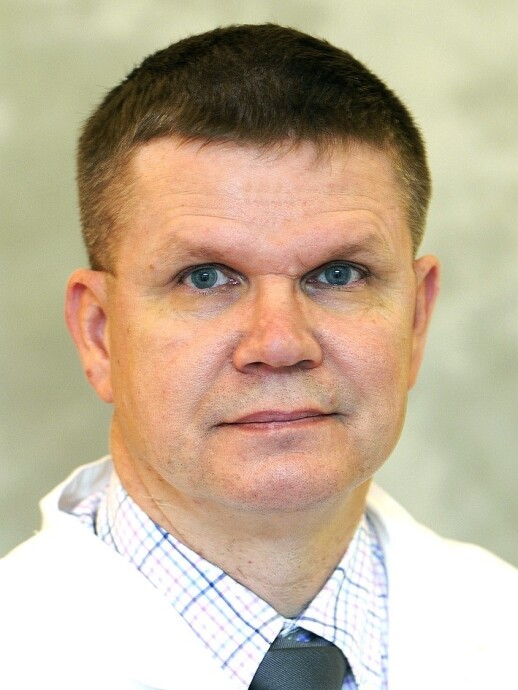
Glyn Johnson is a Professor of Clinical MRI Physics at Norwich Medical School, University of East Anglia, and an Adjunct Associate Professor of Radiology at New York University School of Medicine. He is also an Honorary Professorial Fellow and a member of Cancer Studies at UEA. His career spans leading institutions in the UK and the US, including the University of Aberdeen, Columbia University, and NYU, where he led the brain tumour imaging research group.
- BA in Natural Sciences (Physics and Theoretical Physics), University of Cambridge (1977)
- MSc in Medical Physics, University of Aberdeen (1978)
- PhD in Medical Physics, University of Aberdeen (1981)
His research focuses on developing quantitative MRI techniques to improve diagnostic accuracy in cancer, particularly by distinguishing benign from malignant lesions. His work addresses challenges in lesion characterization using advanced MRI methods such as perfusion, diffusion, and sodium imaging. He has made seminal contributions to MRI physics, including co-developing spin warp imaging during his PhD.
His recent publications show a strong trend in applying diffusion MRI and perfusion modeling to prostate and brain cancers, with increasing emphasis on computational and Monte Carlo modeling of tissue microstructure. He also contributes to interdisciplinary research linking nutrition, cognitive ageing, and neuroimaging.
Notable scientific engagement includes membership in the ISMRM annual meeting program committee (2005–2007), ongoing service on NIH review panels, and extensive peer-review activity for academic journals since 1984.
He has led multiple research projects funded by the National Institutes of Health and Abbott Nutrition, focusing on brain tumour imaging, cognitive ageing, and prostate cancer detection. His work is cited in policy and media, reflecting its translational impact. He is actively involved in collaborative research and continues to publish and secure grants, indicating ongoing academic leadership.
Johnson is affiliated with research teams at UEA and NYU, and his projects often involve multi-institutional collaborations, particularly in neuroimaging and cancer studies.