معرفی
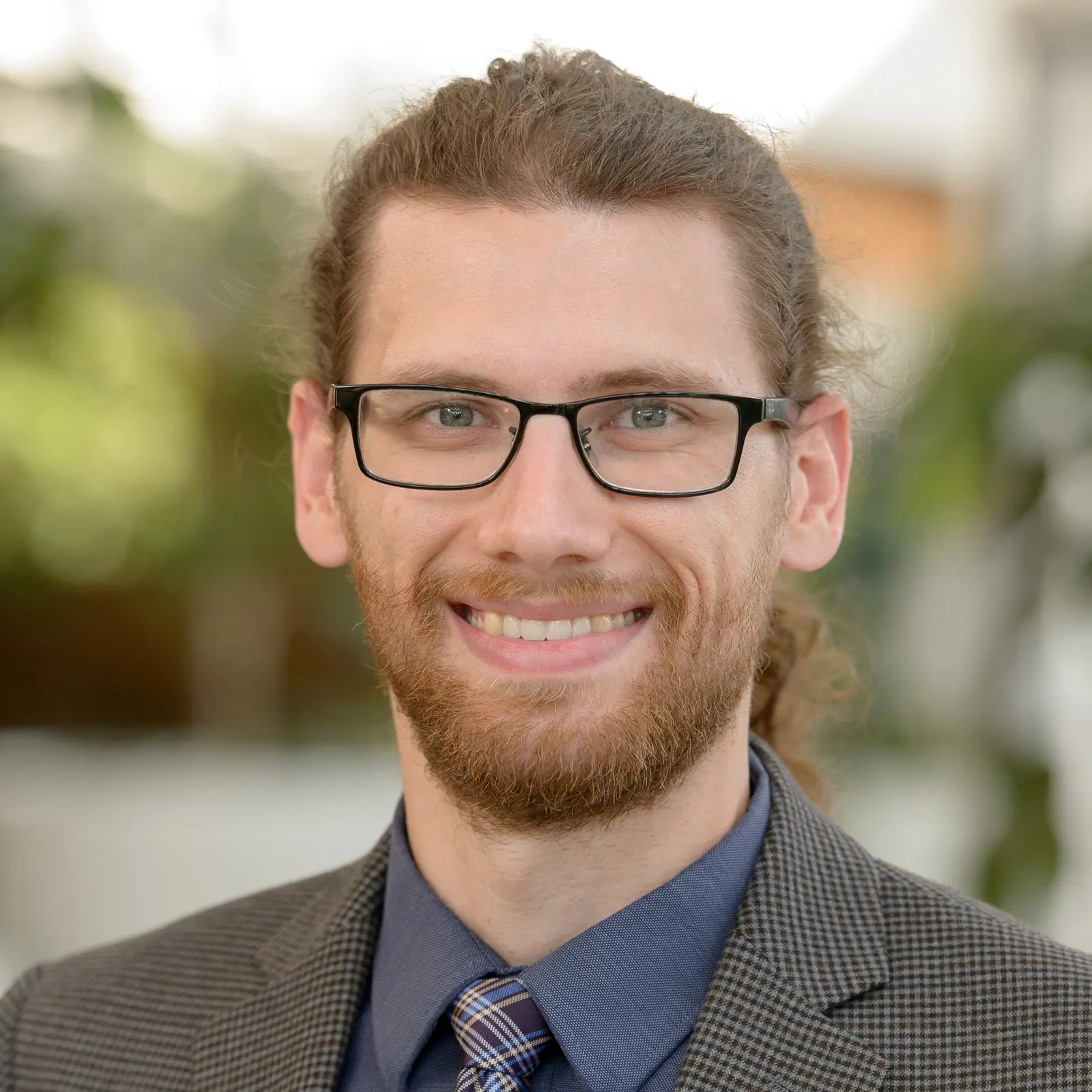
Giovanni Tretola serves as a Postdoctoral Research Assistant (academic rank: Researcher) within the Department of Engineering Science at the University of Oxford, affiliated with the Oxford Thermofluids Institute and Thermal Propulsion Systems research group. His work focuses on advancing hydrogen safety through integrated computational fluid dynamics and machine learning methodologies for energy systems.
His academic foundation includes a degree in Energy Engineering from the University of Sannio (Benevento, Italy), followed by a Ph.D. in Mechanical Engineering from Imperial College London. His doctoral research developed "Large Eddy Simulation of atomisation process using the Eulerian Stochastic Fields method," establishing his expertise in probabilistic spray modeling. Subsequent postdoctoral roles at the University of Brighton (cryogenic multiphase flow modeling) and King's College London (liquid/solid interaction techniques) further expanded his computational specialization.
Dr. Tretola's research centers on high-fidelity numerical simulations of hydrogen safety challenges, with particular emphasis on cryogenic hydrogen jets, turbulent spray dynamics, and supercritical flow phenomena. He pioneers hybrid approaches combining traditional CFD with machine learning for droplet characterization, jet mixing analysis, and thermo-physical modeling under extreme conditions. His work addresses critical gaps in hydrogen infrastructure safety through advanced computational diagnostics and predictive modeling.
Analysis of his recent publications reveals a cohesive research trajectory focused on cryogenic hydrogen systems, with methodological innovation in proper orthogonal decomposition for flow characterization, multi-component volume of fluid methods, and machine learning-assisted prediction of complex fluid behaviors. His publications consistently target practical safety applications in hydrogen energy systems through rigorous computational validation.
As an active member of Oxford's Thermal Propulsion Systems research group, he collaborates closely with Professor Konstantina Vogiatzaki on cutting-edge propulsion and energy system investigations, contributing computational expertise to experimental validation efforts and safety protocol development.