معرفی
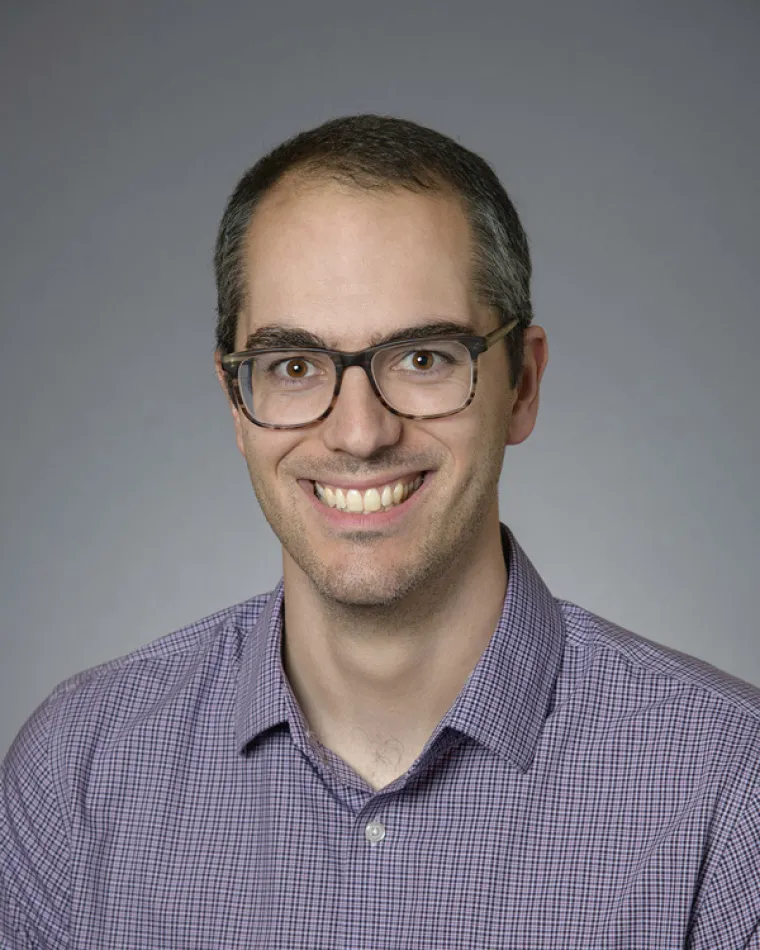
Gernot Laicher serves as a Professor (Lecturer) in the Department of Physics & Astronomy within the College of Science at the University of Utah, a position he has held since July 2018. His academic career at the university began in January 1998 as a Research Assistant Professor, advancing to Research Associate Professor in July 2006 before his current appointment. Fluent in both English and German, Dr. Laicher maintains active teaching responsibilities including Physics Lab courses for Science & Engineering students and Foundations of Modern Optics, with upcoming judging duties at the 2025 Utah Science and Engineering Fair.
Dr. Laicher's research centers on nuclear magnetic resonance applications in biomedical contexts, with particular expertise in lung imaging using hyperpolarized helium-3 and xenon gases. His work bridges physics and medical diagnostics, developing non-invasive morphometric tools for assessing pulmonary conditions like emphysema. His publications reveal a consistent focus on diffusion phenomena, gas dynamics in biological systems, and the development of novel imaging techniques that correlate with histological findings. This research has significant implications for understanding lung pathologies and developing diagnostic methods.
His scholarly output demonstrates expertise in both theoretical modeling and experimental applications of NMR techniques. The longitudinal nature of his publications spanning from 1993 to 2008 shows sustained contribution to the field of biomedical physics, with particular emphasis on translating fundamental physics principles into medical applications. His work frequently involves sophisticated analysis of relaxation times, diffusion coefficients, and gas transport phenomena in biological tissues.
Dr. Laicher maintains an active teaching schedule with numerous Physics Lab courses for Science & Engineering students across multiple semesters, demonstrating commitment to undergraduate education. His ORCID identifier (0009-0000-5122-3771) provides formal recognition of his scholarly contributions, and his contact information includes both university email addresses and a direct phone line for professional communication.